
 Apple Podcasts
 Spotify
 YouTube
 Talent Talks with Will Hayllar: AI Won't Replace Consultants In The Way We Think
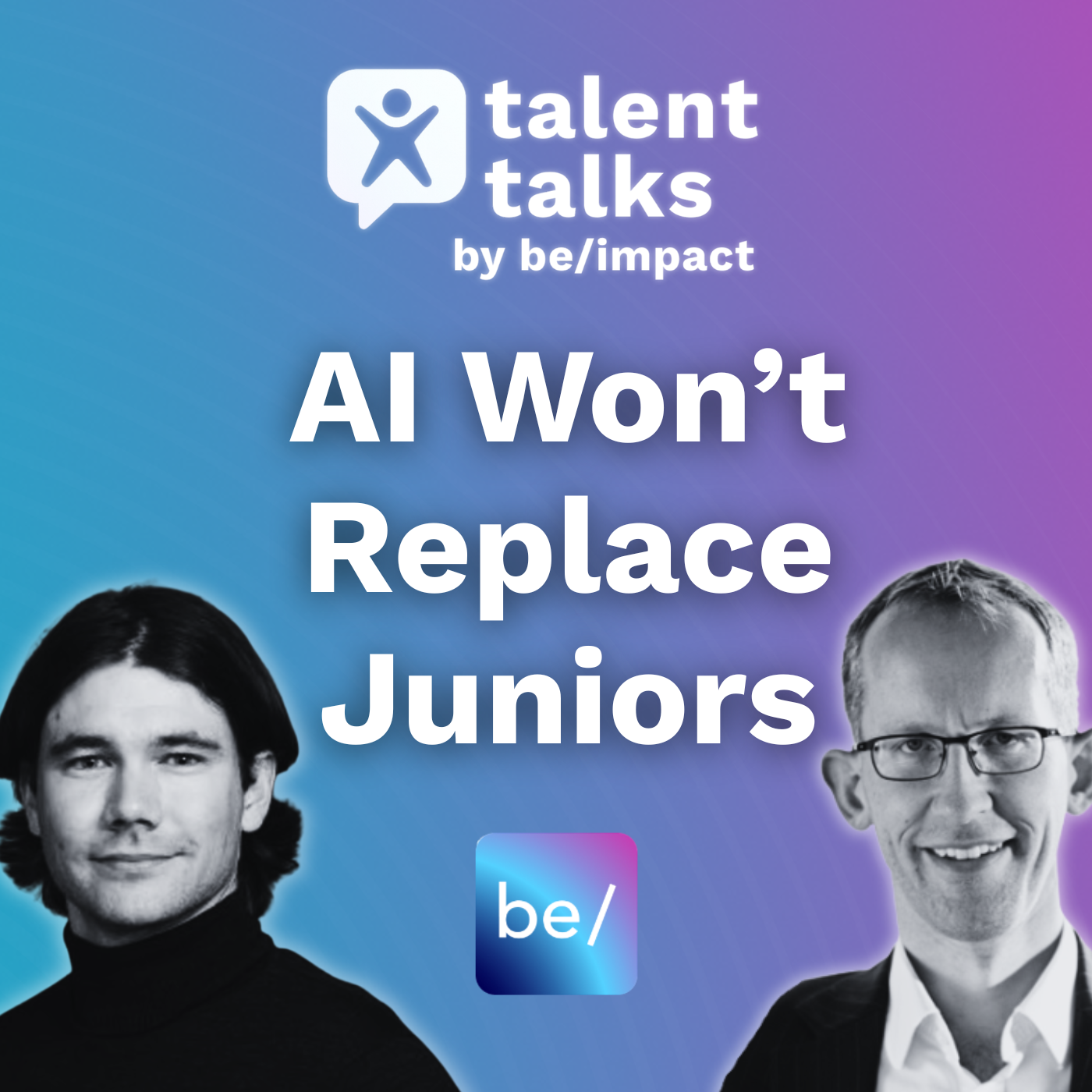
In this episode of Talent Talks, Julian Buschmaas speaks with Will Hayllar (Global
Managing Partner at OC&C Strategy Consultants), about the future of consulting,
leadership, and talent development in an AI-driven world. He has spent 25 years in
consulting and now focuses on building a strong, future-ready firm that combines
analytical rigor with human-centered leadership and learning. The conversation
explores how firms can balance analytical excellence with the human skills that matter
more than ever: critical thinking, influencing, judgment, and relationship-building.
Who is this episode for?
-Senior leaders navigating AI's impact on teams and talent
-Consulting & professional services leaders rethinking apprenticeship and partnership
models
-L&D and talent professionals focused on building human skills
-Early-career professionals looking to future-proof their careers
Chapters
0:00 – Introduction
3:45 – The shift from advisor to leader
8:20 – Learning from mistakes
14:05 – How AI is changing the apprenticeship model
20:30 – Why human skills matter more in an AI era
26:15 – Why firms still need juniors
31:40 – Preparing the next generation
36:55 – Closing thoughts
Practical takeaways
● Don't treat AI as only a tooling or technical issue.
● Invest in human skills early: communication, persuasion, judgment, and
structured thinking.
● Update apprenticeships so knowledge can flow in multiple directions.
● Great leaders make themselves replaceable by building others up.
● Keep hiring juniors, but redesign what they learn and how they contribute.
About the host
Julian Buschmaas is the CEO and co-founder of be/impact and the host of Talent Talks.
He works at the intersection of learning, talent, AI, social impact, and the future of work.
Connect
Be/Impact - https://beimpact.co.uk/
Connect with Julian on LinkedIn - https://www.linkedin.com/in/julianbuschmaas/
Connect with Will on LinkedIn - https://www.linkedin.com/in/will-hayllar-a6532636/
OC&C Strategy Consulting - https://www.occstrategy.com/en
speaker-0: Certainly in consulting, in our world of consulting, the selling process is really just an earlier stage of problem solving. Is this fundamentally gonna make this organization better? Is it gonna help this client succeed?
speaker-1: Make the case, why keep hiring and developing juniors when AI can do so much?
speaker-0: fundamental disruption comes from back the people who maybe have the most experience of adopting new tools are not necessarily the people that have had three more years of seniority and experience in the in the business so that sort of the hierarchy doesn't lend itself to that cascading of knowledge that we need.
speaker-1: Welcome to Talent Talks by Be Impact, the podcast, where we speak with leaders across professional services, technology and consulting about what it really takes to attract, grow and retain top talent. Hi, I'm Julian, CEO and founder of Be Impact, where we believe that teaching is not only the best way to learn, but also the best way to build the human skills AI cannot replace. And in each episode we explore how firms are rethinking development, leadership and culture. And what it takes to build teams that stay and thrive. And today I am very happy to be joined by Will Haler, who leads OCNC strategy consultants around the world. And I'll be honest with you on the top. â Will, I want to do two things in this conversation today. First, I want to understand you, because your story is a bit of a lovely accident. â you trained as an engineer, you were sponsored by the Ministry of Defense, and you spent summers working out how things work at Airbus and Land Rover. And then you stumbled into strategy consulting, â thinking you would â do it for a couple of years and then â get, in your own words, a real job. But now, â a couple of years in, I guess, â that was twenty-five years ago, and today you're the elected leader of the whole firm. and then I want to get into the thing you and I are also quite passionate about, which is upskilling and developing people, especially the human side, when AI now is changing the way we work. Especially also with our technical skills â but let's start with you â before we get into the future. â Will, â a very warm â welcome â on the show.
speaker-0: Thank you, Julian. â great to great to be here and looking forward to the conversation.
speaker-1: Marlborough â engineering the Ministry of Defence. What was the young will like and what did working out how things physically fit together teach you that you might still use today in a completely different job?
speaker-0: The young Will was â interested, you know, all always interested in how things work, â you know, how systems work. â I wasn't super original, so my father was an engineer. â so you know, it was in a in a household where not just on technical things, but always interested in you know what was going on, you know, whole whole range of different topics, current affairs through to through to technical ones, but that meant, you know, f from everything from sort of practically taking things apart and building things with my dad in the garage. you know, through to the topics I probably found most interesting at school, the sciences, and it was always that sense of being able to understand how a whole system works, what was you know, what was making what happened â was you know was something that I found both interesting and I guess I was good at in in sort of analyzing and picking apart things and using logic to to understand how that works. So you know that was that was definitely a part of you know a part of my my sort of upbringing and background that you know that has flowed through into consulting. I th I think the other part as I was reflecting on that question was, you know, I Lucky lucky to be surrounded by lots of good you know good people. So have a you know big family, have two sisters and a and a brother, very big extended family, lots of friends around, my parents were very sort of sociable people. So, you know, al always lots of people around and again I think that sense of doing things together, doing things with people, â is again something that has sort of flowed flowed through ultimately into being part of part of why I failed to get a real job and stayed in consulting for all this time.
speaker-1: And â you've been honest with me in the sense that you said there is there was no master plan and you just found the big or the slow organizations a bit frustrating and consulting just looked â interesting to you and you joined then â a forty person boutique thinking you would give it a couple of years and then get the real job. When when did it stop being a two year plan and start being the thing that you wanted to build?
speaker-0: Yes, that's right. I w I was a I suppose I'm a strategy consultant who didn't have a strategy for their own career in that in that sense. But â I was â and I would say I was probably seven or eight years into in into consulting before I really thought this might be the the sort of the long term option. â at that point I was an associate partner and â had got â I think at that stage I got enough of a sense of what being a partner was about, â and particularly what selling work to clients was about. to to perhaps change my mind and and and realize that was something A that I thought I would enjoy and B that I could be good at. And and for me though the the thing that made that switch happen was a realisation that actually in you know certainly in consulting, in our world of consulting, the selling process is really just an earlier stage of problem solving. It's helping somebody to frame what the question is and how you might be able to help them. And that was a thing, you know, it's the problem solving and the helping people that I really liked. I didn't like the idea of being a sales salesperson and sort of turning up with something to try and convince someone that they should they should buy. So for me that that sort of understanding which I got through, you know, enough exposure to that stage of the process and and starting to have clients trusting trusting me and wanting my help, â that that really convinced me that the next the next stages of this would also be something that I would really enjoy, could could be good at and would be fulfilling. So it was it wasn't really until then that â that I felt this was like to be a long term plan.
speaker-1: But even even that, six, seven years in is already quite a bit of time within within consulting where a lot of people leave, I guess, within the within well below the two year mark or two year mark â coming in. But yeah.
speaker-0: Yeah, and I don't I mean I'd always sort of my my only real guide as to should I stay doing this or not was was I still enjoying it, was I and was I learning things. â and if I felt those you know, those two things were true, then it would felt like it was it was serving me well, you know, knowing again with a mindset that it probably was a path to doing something else at at some point in time, that's maybe one of the benefits of consulting is that you're not you're not â proceeding down a a dead end, you're proceeding down a set of skills that you're building that are pretty widely applicable. So so for for me from for the first six, seven years it was really That tests, you know, am I enjoying it, am I learning things, am I working with people, spending time with people that I enjoy spending time with, but I get something out some satisfaction out of achieving things with, that's a huge part of â you know, huge part of all of our working lives. And therefore if those things were all were all true then I was happy happy continuing.
speaker-1: I guess yeah, nobody makes that journey alone. You already started talking about how important it was to you to work with people that you enjoyed working with and and learning from as well. and â we talked in our intercall about, I guess, two people that you said that really â shaped you. â Chris Outram, the the founder, who you work with directly as you were becoming a partner, and â David I'm su sure he's bringing yeah, exactly his last name here. â one of your predecessors. And â maybe starting with with Chris. What did he teach you about â being, as you put it, a genuine advisor? That's not about the pack and the analysis. â it's about how you help, I guess, the individual in front of you. Yeah.
speaker-0: And I was you know, I was lucky to be in a position working, you know, very directly with Chris because he was he was the the founder of O C and C so someone with consulting through his veins. and yeah, he r he really helped me see and understand how this was really all about how do you help the clients' organizations to succeed, but also how do you help the individuals that are your direct clients navigate that, succeed themselves and and make the difficult decisions which are often involved in helping their organizations become successful. So that you know, that really lifted what we were doing beyond the the direct anal analytical work, the direct presentations and even the direct sort of formal meetings that we're having to to understand actually really how we're trying to influence and help this person and this organisation achieve something. So that that real focus on is it is this fundamentally going to make this organisation better? Is it going to help this client succeed? â was a you know was a real strong vein that I picked up from Chris.
speaker-1: And then I guess from from David, you learned how to lead in a partnership, â which you framed as serving a set of co owners, I guess, rather than than being a CEO. What's what's the hardest part of leading people who are also your owners and your equals?
speaker-0: Yes, it's â it's quite a unique dynamic in a partnership. And our ours is certainly a very genuine partnership where we want, you know, absolutely want all of our all of our partners to have a real voice in how â how the business develops. And I think, you know, the the key to that is sort of recognising that and both certainly serving and harnessing the sort of the powers of that. And I I and I think the things which take some effort and maybe you have to do more of than if you were a CEO with sort of hard power in a in a conventional business are really spending time engaging with that set of partners who are you know, have several hats on. They're they're your senior they're your senior team. They some of them have got executive positions, others of them are, you know, brilliant commercially in their field. All of them are â co owners. So you know, when you're trying to make change happen, you need to spend more time making the case for that. You need to listen a lot. â I think probably one of the things I have done reasonably well is listen â and and pick up a sense of actually what's important to the partners, what's motivating them, what's concerning them. â and how you can bring that together into something coherent. And then you obviously as an organization do have to act. So you can't please everybody, not everybody is 100% aligned. But that process of consultation and genuine consultation that helps to shape â the way you go about doing things to to get people on board is is really important. So you have to put a good amount of energy into that and not not underplay that over time. The the sort of the flip side, which I think is where you know the the beauty of a partnership is all those people are co co-opent. So ultimately once we make a decision. â people really are motivated by what's going to be the right thing for the organization. â people have got that entrepreneurial hunger, they're not there sort of doing their day job, they're really there to help build the business. So â there's a lot of power in in a partnership in that way. So the the trick is sort of harnessing the power and recognising that you have to put some extra effort into â into â into creating creating the right kind of case for change.
speaker-1: Fantastic. And I guess these were two role models then that helped you â on the I guess sh on the positive side on role modeling â this. Is there also another side? Are there any people you came across? â obviously you don't need to name them, but across the twenty five years, â were there any leaders who showed you what you didn't want to become and and why that was the case? Yeah.
speaker-0: I think â look one of the benefits of consulting I suppose is you get exposure to so you know many many different organisations, leadership teams, â you know, and lots of things you learn from people who are doing things brilliantly, but it also gives you some sense of different styles and at least the ones that for me weren't weren't resonant with what I wanted to be. And and I think â you know, where where I came across situations where you have a very aggressive and sort of directive style of leadership, you know, that that isn't something that resonated with me or what I think would work in our â in our partnership. â and I've seen You know, there are certain situations where that style might be necessary. So if you're in real crisis mode to get things done quickly, â you know, that that can be â that can be effective. But on average what I've seen in setting in clients where that sort of leadership style has existed is it it tends not to build the capability of other people around them and therefore over time becomes becomes a limitation and it and it starts to sort of starts to choke growth and development of the business. So not you know, always it's always in my mind not just how do we make the right decisions. and get the right things done, but how do you try and do that in a way which is also building the capability of others around you and others in the team? And that's if you know if you're doing that right, then you're really gonna build a a stronger organisation over time and one that can keep growing.
speaker-1: Yeah, and I heard a lot within that also making sure essentially to actually making yourself replaceable rather than the other way around of just defending your position, which is â ultimately yeah, not the way to
speaker-0: Yes, exactly. Succession is perhaps the best testament and the most important thing that any leader does â over time. So mm and the posit the positive way of doing that, and particularly in a business which is like ours has got plenty of growth opportunities, is making sure you're you're building lots of people that are capable of leading things so it doesn't become a zero sum game. It's â it's about it's about growing the capacity of the business to to lead and to keep expanding.
speaker-1: And then I guess you said a lot of growth comes also through making mistakes and being willing to admit that they that they happened and that they are there. â you told me about one hard one early in your partner days, â where you had a difficult, almost dysfunctional client, â the team bogged down in complexity, and nobody really put up a hand early up â enough essentially to say, Hey guys, this this isn't working. Let's reframe it. walk me through that. That moment â what that situation and what happened and what you learned from it.
speaker-0: Yeah, it was a bit of a perfect storm of of â of challenges and a sense that actually was one of those was one of those sort of leadership styles of someone who was quite aggressive, but in this case also quite indecisive, or at least the goalpost moved you know, moved. So it wasn't always clear what what was really going to land. That combined with the the sort of the data that sat underneath trying to inform those decisions was messy, â took a long time to manipulate and make make sense of. overlaid with bits of politics and with client organization, which meant different people had a lot of vested interest and different answers, all of which you know made it very difficult to make â to make progress. And I think you know that at that point in time what I and the rest of our team did was sort of dig dig deeper, work harder, assume that we would just be able to sort of plow our way plow our way through it all. â and I think that's probably quite a common a common mindset of people that are sort of determined and used to succeeding and motivated that you just keep trying harder. â â and it did take you know, it took another advisor that was working on a sort of parallel stream with us to s sort of to to call call out and say something, you know, this isn't this isn't going in the right direction, something needs to change, let's take a step back and think about how we you know how we can reshape that. And I and I think what I definitely recognise do that is a pretty common human response that when people are stressed, you tend to narrow the horizons of what you think is possible rather than broadening them out. â someone who is sort of slightly peripheral. But observing that situation to to be able to sort of spot that and intervene in a way which helped to then reframe and open out and say, actually look, there are more ways we could go about this. There are different different things, different choices we can make, different ways of shaping this to make sure we ultimately get to something successful. Yeah. So it's a pain a painful lesson but a valuable one.
speaker-1: In general, what makes it then hard to raise a hand, especially when a lot of things made going on and in somebody else's life outside work as well? it was in the end, I guess, you said another advisor alongside you who called who called the pause. And â how how do how do you â talk now with maybe some of your partners or leaders that are in those kind of positions to yeah, to to step up or â and do being that person for someone else?
speaker-0: Yeah, so we â it's a great great question actually. It's probably a has become a core thread of some of the formal training we give our we give our partners around people leadership as well, which is recognising, you know, when something is going wrong somewhere â you're not happy with something, it might be how you know how the team is â doing the work or some some some interaction with the client team that actually â often adds because someone is struggling somewhere and finding a way to get to to unlock that, to intervene, â to open up that dialogue and get to the root cause of what â you know, of what the the challenge or the discomfort is then creates the right conditions where everyone can, you know, start to start to reshape again. So I I think that re recognising the value and the responsibility you have as a leader to be able to step in to intervene to open up those set of possibilities when people that you're interacting with are sort of closing them down, I think that you know that does become a really valuable thing to do and an important part of leadership responsibility.
speaker-1: All of that now adds up to a leader who told me he's generally not that motivated by sitting at the top of the hierarchy. â that what you love is helping people you believe in achieve something, I guess, together. where does that come from in you?
speaker-0: I think I've always enjoyed being part of a team, you know. â I suppose I talked about, you f growing up in a family, and that that that's one form of team, groups of friends around. So I and I think through that have always found that ultimately achieving something as a team is the most rewarding form of achievement, certainly for me. â and so and that you know replicates through sporting, you know, pastimes and hobbies through you know, through different different sort of ventures. And so that you know, that side of leadership and again, particularly I think leading in an organization like a partnership where you're you're surrounded by leaders and and co-owners â has been the thing which you know which really resonates and you know what I've enjoyed frankly far more than I thought I might do when taking a on on this role is the sense that again you're still you know you're part of a team, you might have a specific role to play within that team. It's an important one, but you are part of a team, not not a lone person deciding everything. So the more you harness the strength of that team, the more you help other people succeed to their best extent within that, the more you can achieve. â you know, realising and defining defining success as how much can you help other people achieve rather than what can you do yourself â is a much more a much more scalable thing. And certainly it's the thing that the thing that â maybe luckily or not for me, luckily you know, sort of naturally naturally is is most motivating.
speaker-1: Fantastic. And that is the perfect transition to move a bit more on the topic of people development, I guess, which I I want to spend some time talking with you about. And I guess you yourself were built by an apprenticeship. And â I guess AI is a bit changing now how that model could could look like also going forward. And â I guess the way consultants have always learned is by sitting next to someone or being in a team with somebody that did the job three years before them. And you told me that AI is now breaking that model a l maybe not just a little bit, but really on on that end. You said the fix has to maybe now cascade upwards and sidewards and and not just trickle down. What does that actually mean in practice for you at O C and C right now?
speaker-0: And and I and I guess that that sort of fundamental disruption comes from the fact that the people who maybe have the most experience of adopting new tools are not necessarily the people that have had three more years of seniority and experience in the in the business. So the sort of the hierarchy doesn't lend itself to â to that cascading of knowledge that we need. you know, as long as you can recognise that, you can still have the cascade of knowledge, you can still have apprenticeship. You just found different conduit for it. So we have you know identified AI champions in, you know, across different parts of our business who often were people who â maybe just informally were most interested and started experimenting ahead of ahead of others and got themselves further up further up the learning curve. So once you've identified those, you know, those people and we now sort of form formalize some of that â some of that role for those people, or at least that identification of those people, we can then â y we can then cascade the knowledge out from â from those people to the teams that are sitting around them. So again it's it's still a it's still a cascading of knowledge, it's still an apprenticeship model. It's just rewiring a little bit how that on that particular dimension of apprenticeship, â you know, where the where the knowledge sits, where the experience sits, and therefore where it where it needs to cascade from. And I guess the com complex thing about AI is this isn't just sort of an individual tool. It's not, you know, it's not just a new XL or something like that where you could You could train it in c quite a compartmentalized way because to really harness the benefits of it, it doesn't require â whole teams to work in different ways and people to interact in different ways. And so for that, you know, for that reason we run â what we call red teams, which are sort of teams which we sometimes put in parallel on a on a on a project to really push the boundaries of what the AI technology will enable us to do and how the sort of how the team needs to work together and focus together and construct a different project rhythm to be able to really harness those things. So you have sort of you have individual AI champions that have great bits of Yeah. Specific knowledge and then you build in these teams sort of the experience of actually how do how do we best bring these things together? And again, those teams and the members of those teams become partners of the cascading out. So that's the that's the approach so far.
speaker-1: I guess the absolute core of a great consultant, the critical thinking, the ability to structure a problem, to challenge, to convince becomes now more important in an AI world, â not less as as what you you said to me. And why is that the case? Why more when the machines are getting so capable?
speaker-0: So I you know, th when the machines are getting more and more capable, the people need to sort of focus on the things which people are still â uniquely well placed to do. â and part of that where decisions in most systems, you know, there are some systems which are almost closely machine systems, those are probably not in the world that that â I my team s sort of spend time in. But â in most systems you still have people that are making decisions â ultimately and if the truth you know if a good good strategic advisor's core role is ultimately to help people make good decisions, then those you know, those skills of influencing, of of understanding, of listening really hard in the first place to understand actually what's the nature of a decision, how how are you going to get not just that person that you might be directly interacting with, but the organization around them confident to be able to take the right â the right steps, even if the answer might be something which can at least partly generate you know generate through the through the new tools more effectively. That that becomes a really important part of that â of that journey. And I think I I'd also say is exactly the sort of the core critical thinking, how do you really frame the question, what you know, what tasks, what questions, what objectives are you setting, different AI agents on, again, I think is still something where the experience that you bring, the different patterns, the the sort of non obvious thoughts that you might be able to â might be able to see to to experiment, to test different hypotheses, not that you'll always be right each time, but that you can explore and sound out and and ultimately build the right the right set of knowledge to get to robust conclusions. I think those those two cores. Absolutely the part of part of where people can really harness and be more you know, become more powerful rather than become replaced by â you know, by all the advances in technology.
speaker-1: And I guess we can summarize those a bit more as what we call now then the human skills. â and â the yeah, summarise as the soft skills, the advising, the influencing, the judgment. And I guess in that consulting profession, â historically people have also been very much selected on some of the analytical capabilities and and and strength, like on the how well they can or how quickly can they build a financial model or an analytic analytical piece. How do you now deliberately maybe or Are you now switching that maybe selection process, but also then what you train people on deliberately, more on on soft skills instead?
speaker-0: So there there there definitely is a shift of emphasis in to to to really highlight both of those two areas that we were we were talking about. And I think, you know, even even pre AI, I'd say that that core analytical thinking â in the truest sense hasn't really been able to get to the fundamentals of something and understand you know logically how something is working and what might drive it and w where you're gonna be looking, that that skill â you know has always been sort of the the c the core of things. And I think actually amongst those people that were â maybe very good at building Excel models, let's say. We'd always found there were a subset who were doing that because they were really good at understanding the core fundamentals. Yeah. And okay, you know, okay at building the the technicalities of the modeling. And those people tended to to have a good linear kind of progression would keep going because the thing that they were the thing that was underpinning their insight was â you know continued to be valuable as it went through. And conversely there were some people who were maybe very good at technically building a model that were less less â skilled at really understanding and pulling apart the sort underlying drivers or something. So they were numerate â and sort of technic technique technical anal analysis, but not necessarily the sort of deeper underlying logical analysis, analytical skills. And and that, you know, has always been a sort of they've often hit a glass ceiling within, you know, within consulting, I think. I'm an optimist on these things. I I I I think that if we get that right, both in the skills that you emphasise when we're recruiting and as you say, the skills that we're really focusing development time and energy on. most of which comes actually from what are you really asking people to do on their jobs and in their projects and a a little bit comes from the formal training. If we get that right, there's actually more consistency and coherence of the skills that will help you succeed at that sort of in the early stages of consulting with those that will equip you to keep succeeding as you progress through and become more senior, become a genuine trusted advisor. So I think I think there could be a there could be a â a better connection almost between what what are we asking people to do in the early years of their career and what are the what are the muscles which they need to have built to become really successful. If they want to if they want to stay doing this for a long time.
speaker-1: Discussed this a bit with leaders that working on more technical consulting elements, so â developers and things. And there we we talked a bit about the context of almost a driver license for juniors. So the danger is I guess, or even if AI is now capable of building a financial model, how do we know that it's actually a really good model? So I guess we're flagging the danger that AI gives you something plausible very fast, but it might be A wrong or just not good enough. And you you said the danger zone is then actually this middle where people with some experience but not enough producing something that looks really sophisticated that that isn't. now in in within these technical consultancies we talked about the concept of the driver license as we don't give them any AI until they until they build a certain code capability. And then when they have that, then they're allowed to use AI and then can do that much better. Is there some sort of thinking within that in in how you currently see that some of the juniors starting at O C and C are maybe doing some of the Excel work where are they are they getting all the tools right now straight away, or is there a way how do you how you how do you tackle that problem within within your field where I guess it's not as technical as writing code is, â translating that to building, I guess, a a good financial model or
speaker-0: Yes, so it's not I I think that's right, it's not as so the distinction isn't as black and white as perhaps y you know, your both technical technic coding conversations had surfaced. So we're not in a world of sort of restricting what people are using to un until they've proven a certain a certain point. â it is more about â really challenging the fundamentals â of of the work at sort of at at all levels. â and that's you know, that's always been somewhat our our sort of approach and style with you know, with senior peop people sort of partners downwards engaged in the problem solving and a lot of that through discussion, different people sharing bits of findings and then us discussing, challenging, do we think that's real, what's really driving that? That seems surprising. can we explain it? If we can't explain it, let's go away and look at you know, look look harder, 'cause in the end you need to be able to get back to the fundamentals of why something is i is happening, to be confident â yourself that it's the right answer and then to be able to convince â to convince others. So as long as you engage through the team in that activity and you still re you know you still place importance on that and recognise the fact that it's gonna take probably more of the more percentage of the time now to to do that â because it's you know it's it's become quicker to create things, â but a bit more of a question yeah a bit more of a need to question those things, then you you sort of shif you shift the time, you shift the emphasis a little bit of what â what as a team you're focusing on, then I think you can then I think you can get there and mitigate that.
speaker-1: And that's I guess the the the critical point you mentioned earlier already when you talked about also the â individual AI champions that you have that that might be a bit younger and less less experienced, but then combining that with the the whole almost team â of of of people that come and support a project on on making the most of most sort of AI. â is there also an emphasis more on maybe almost pairing up, like this kind of re reverse mentoring situation where some of the youngers are deliberately paired up with more of the senior seniors to to speed up maybe the that process of understanding what good looks like and and what maybe needs a needs a needs a second â pair of eyes.
speaker-0: you know, th there are w probably we're not formally pairing people up, but there are but because of that approach, you know, there are lots of instances where it will be a less experienced or at least a more junior person in the organization that's got the knowledge of how something works well and they're sharing that with more â more senior people in the organisation. So that and I think the you know the mindset to always want to learn â is pretty strong in in our business and the types of people that join â join a consultancy like ours. So that's you know that's as true from the senior team as it is â from you know from people that are newer into the business. So that you know that dynamic is happening sort of every day almost informally because of the because of the approach that we're taking to to cascading the sort of specific AI skills. And I guess it's where you get those you know, that that knowledge of how you might be able to get the tool, you know, a tool to do something and what the maximum you can get out of that is, that combined with some of the experience to think about what might actually be fundamentally driving things or where the pitfalls are likely to be, â becomes really powerful. But I I think our Yeah, our our main answer to that is is to work work well together in teams and make sure we're putting the right emphasis within those teams on on on the on the challenge and the like the thoughtful use of what we're gonna ask these things to do and then the challenge of the res results that are coming out of it.
speaker-1: There is a an ongoing debate right now with â with a lot of professional services firms â that have traditionally have the classical â triangle structure â with a lot of juniors on the bottom and â and a bit more â seniors at the top. versus what's now seems to be coming a bit more in trend, â which is I guess called the diamond shape, where â you have then â a bit thicker layer of of middle to senior people that now apparently with the AI tools can can harness the productivity â the most over the juniors and they stop hiring juniors. You told me you're still a believer in the triangle and that firms like yours, if they stop training people, â that who who else will basically develop them. So make the case â for for others in that situation. Why why keep hiring and developing juniors when AI can do so much of of what they used to do?
speaker-0: We're clear for a business like ours, which is an apprenticeship is an apprenticeship business that if we're going to succeed over the long term, we need to still be able to harness young young talent, train train them, mould them in the things that are really important to be good at to do our to do our job. â and the nature of those things is definitely evolving. So the shape of what those junior people are gonna do is changing. But the fact that you need them, â if you're gonna keep building up that middle layer, I think hasn't yeah, hasn't changed. So you know, a a diamond shaped business â risks being an unsustainable one over the long term unless you've got good ways of replenishing that middle of the pyramid. And that's where there may be there may be some â some advisory businesses where actually you have a good gr you know a good training ground somewhere else and you can take those you you can take those people but in strategy consulting that's really not the case. â and so your your your primary route of getting great people is the people you hire in â at the bottom and and train up. And I think that that will continue to be the case for us. So it's all all the focus should be not on how many of those people do you need, but what do you need those people to do and that's that's clearly changing. But I think, you know, having super smart, young, tech savvy people who are adaptable, keen to learn, if you can't if you can't build and find find ways for people like that to be productive, then we're in â we're in we're in trouble. And I firmly believe that those those people are an important part of the answer, an important part of how we harness â it's just technology and â and not some not replaced by it.
speaker-1: What's message then to to those â that studying currently engineering or business or that are basically in university right now and they they have the aspiration to work in a company like OCNC? How how how should they select their courses? What what what emphasis maybe should they put on to be prepared of to for the skills that that that are now needed in the in the in the workforce to come in the next two or three years as they will enter the the workforce?
speaker-0: So I I I think there are sort of the the the twin tracks of it is obviously helpful to be sort of fluent and capable and and understanding of AI tools and what those technologies enable us to do. So y you know, getting plenty of opportunity to experiment with those, use those, understand where they're working well, where the limitations are is important. But I think the bit I would put extra emphasis on is is really those human skills that we were talking about before. And they're they're perhaps the ones that are not not as obviously driven by the technology and the need to sort of learn how to use the technology, but I think are are even more critical because of that. So finding opportunities to make sure you're working in teams, thinking about how you can communicate within those teams, thinking about where you can persuade people, influence people, as well as some of that stepping back and really thinking from first principles about how and why something might be you know might be working, might be happening, might be the answer. Those are the those are the things that I think will really sort of help people s step apart from â you know, I think I think usage of the tools will become a hygiene factor over over time as they become more widespread. It's not yet, then they're they're maybe developing fast, so that's different. But you wouldn't you know you wouldn't you wouldn't select your hiring of people now on the basis of their familiarity with sort of competence in Microsoft Office Suite, let's say, which might be might be in in a in a period of time the the equivalent of that or that you the ability to type of all these things which have been different, you know, quite fundamental technological revolutions over time. So This is a more complex one as we were saying, it's more multifaceted, but over time, that that will become a a a hygiene factor in my view, and and those other core skills will still be the things which really enable people to differentiate.
speaker-1: And I guess there is also an ongoing debate whether within the new generations coming out of school, â just because of how used they are to digital tools, some of these more human skills are actually â needing to be more developed â than than before, just because yeah, conflict has been more resolved through text messages â rather than through through a communication face to face.
speaker-0: Absolutely. And I think we already saw that for the generations of people that were going through sort of formative education stages during COVID lockdowns, they're really you know, they miss missed out on some important development of how to catch up with just how you know how how you engage face to face, how you engage in person and and the power of doing that in the right in the right situations. â remotely and using the technology to do some of these things, but selectively there's still real value in â in being together and being able to influence people in a different way and forming relationships with that. So I think that you know the the the best the best people coming through now you know will not have replaced old skills, they'll have just added added to them and have a broader a broader armory of tools to use to to engage with people, to engage with the problem and to to join those things up. But but ultimately that ability to still still influence people Still â still build relationships with people I think is important.
speaker-1: Last â one might be a bit tricky â to answer holistically, but let's say â you are the learning director and the head of AI in in a company and you have to share one KPI for the next year. How would you actually measure whether your people can generally challenge the machine rather than just defer to what it hands to them?
speaker-0: Yeah, it's i it's tricky to distill this down into â into one into one KPI, but I I think if I was trying to do that, I would be I would be tracking and trying to track the proportion of sort of instances we might define that as a project or a module of a project or a sub question, but the proportion of those things were actually the interaction of the team has â enabled us to get to a better answer than came directly from the AI. So either that's by challenging and finding errors and something where it was sort of hallucinating, or by building building on some really useful parts but making them even more valuable by connecting, you know, by making a connection, by thinking about how to frame it to land with that particular client in a in a different way. So I'd be looking to say, you know, what's the proportion of our output ultimately where we've where we have built upon but not relied solely upon the â the output of AI.
speaker-1: As we discussed in this conversation, AI is making the analysis â easy and putting all the weight more on the human skills, judgment, critical thinking, the art of advising and and how you build those in in people who no longer get the thirty years to learn them slowly or without AI. And I guess that's exactly what â we do at B Impact. We help firms to develop those human skills by having their people teach what they know to teams and non profits and start ups, real stakes, but no commercial risk. And because as we all know, the deepest way to sharpen your own understanding is to have to teach it to someone else. And that same act though cascades knowledge sideways and upwards and exactly the way â you said now I guess it it has to. So for a firm, what it means is that learning that actually â sticks a faster way to build critical thinking in in juniors and essentially yeah, developing them on the job â with real people, â but low stakes. And if any of that sounds useful to you. â the natural next step is â having maybe a conversation â on your development side with â with me and you can reach me at julian at theimpact.co.uk or visiting our website theimpact.co.co.uk. Right, â back back to this episode. â Will, â the last bit is our quick fire. So short answers, first instinct, whatever comes out. The single most valuable skill at work in twenty twenty six, in three words of your
speaker-0: Enc engaging with people to be my my answer to that, having â having talked to it for last hour.
speaker-1: One thing every firm should stop doing in learning and development.
speaker-0: I would say framing AI AI learning and AI capability as a as a solely technical topic and about â purely being about the usage of tools. I think I think it needs to be about all of that wider set that we talked about and the importance of those human skills. So I think there's a mistake of of making it too narrow a topic.
speaker-1: Yeah. And â maybe that answers the second question, one thing every firm should double down on right now.
speaker-0: Yes, I think it does. So I would I would say those you know, those human skills, the real critical thinking to be able to challenge and get to the root cause of something and then the ability to engage with people to to influence both both to learn listen listen, learn and pick up nuance and context and then and then ultimately influence around answer.
speaker-1: best leadership lesson you ever got and who you got it from.
speaker-0: â I think that would be about picking the right you know, picking the right people for the positions that you where you know where you need things to happen. So ultimately if you get that right, then the vast majority of other things go you know go go reasonably well. If you get it wrong, it's it's hard work and you you're unlikely to to make lasting change. So that's â you know that that is the best lesson I think that I've that I've learned and I've probably picked that up. I I say there's no one person that I've learned that from. It's it's come from a a whole plethora of experiences.
speaker-1: talent mistake you've made that you will hopefully will never make again.
speaker-0: Maybe in that same vein, sometimes spotting â spotting real talent in somebody, but perhaps putting them into a position where they're overexposed and haven't got quite the support or the clarity around them to succeed. So almost just you know, gen generally we succeed a lot in organizations like ours by having really talented people and stretching them â and giving them the next you know, the next challenge and people rise to that and so just spotting there are times where you can push that too far and somebody starts to be overwhelmed. overwhelmed by that. So making sure that you've got either the right support mechanisms in place â or you're calibrating that that right because you don't want some you don't someone you don't want someone to have a setback because they've they've just been given a sort of impossibly broad brief too soon in their too soon in their career. Yeah.
speaker-1: That is, I guess, really, really good advice on on that end. And the very last question is the one of having a magic wand, unlimited time, unlimited budgets. And you can change one thing about how your industry is approaching the development â of people again. What what would you change?
speaker-0: Consulting, I think I would give more people more experience of being on the other side of the fence. understanding actually what is it that clients really need, what makes the difference to how they can absorb and act on the the advice that we give. â I think you know, where we have seconds into â into clients, for instance, those are always hugely valuable, hugely valuable situations for our for our consultants. So â more more of that whilst recognising â I think because of the core consulting skills that we you know we need to develop for our people to be able to be effective, we still have to we have to train and recruit from the bottom up. We can't just hire hundreds of people out of industry with mid levels of experience. That doesn't work, you need the blender the two. But adding adding a little bit of that in terms of more of our people is â I think really valuable.
speaker-1: Fantastic. Well, Will, with those last words, â thank you so much for this conversation. â what I take from this is is from a man who came for a couple of years and then stayed â twenty-five. Someone who learned the craft, I guess, of advising from the people around him and who was honest about the times where where you failed and where you got stuck and that you learned from that. â and now who has to help reinventing, I guess, a little bit the way that the consulting world works in terms of learning and upskilling â their people. And yeah, I was really enjoying how how honest and and direct and clear the answers were that you were giving to this. So â I I learned a lot â from this conversation and so I hope that â so did our audience hopefully. And for anyone â listening who maybe wants to follow your work, learn a little bit more about your work at O C and C as well, â where's the best place to to find you or learn more about the work you do?
speaker-0: The best place is via via our website, so Occcrategy dot com and from there you can link to you know you can link to profiles and you can see some of the thinking that we're developing in different industry structures. If you're interested in roles you can apply for them. â so everything everything really kind of runs through the runs through the website. You can also follow on LinkedIn â and â find different bits of thinking coming out there. So those those would be the two places that â would be best for people to â people to engage if they're interested.
speaker-1: Fantastic. And if you enjoyed this conversation, please don't forget to follow Talent Talks wherever you get your podcast. Leave a rating if you can and share it widely with your friends, with your colleagues, â and anyone that you would think would get something â out of â the show. that's how it will reach more people, and that's basically how it can support us in this early days of the podcast. So Will, â thank you again. â and to everyone listening, until next time. Keep learning, keep teaching, keep making your w mo your work mean something. â this has been Talent Talks by The Impact. â