
 Apple Podcasts
 Spotify
 YouTube
 Talent Talks with Mike Drolet: How to drive employee engagement

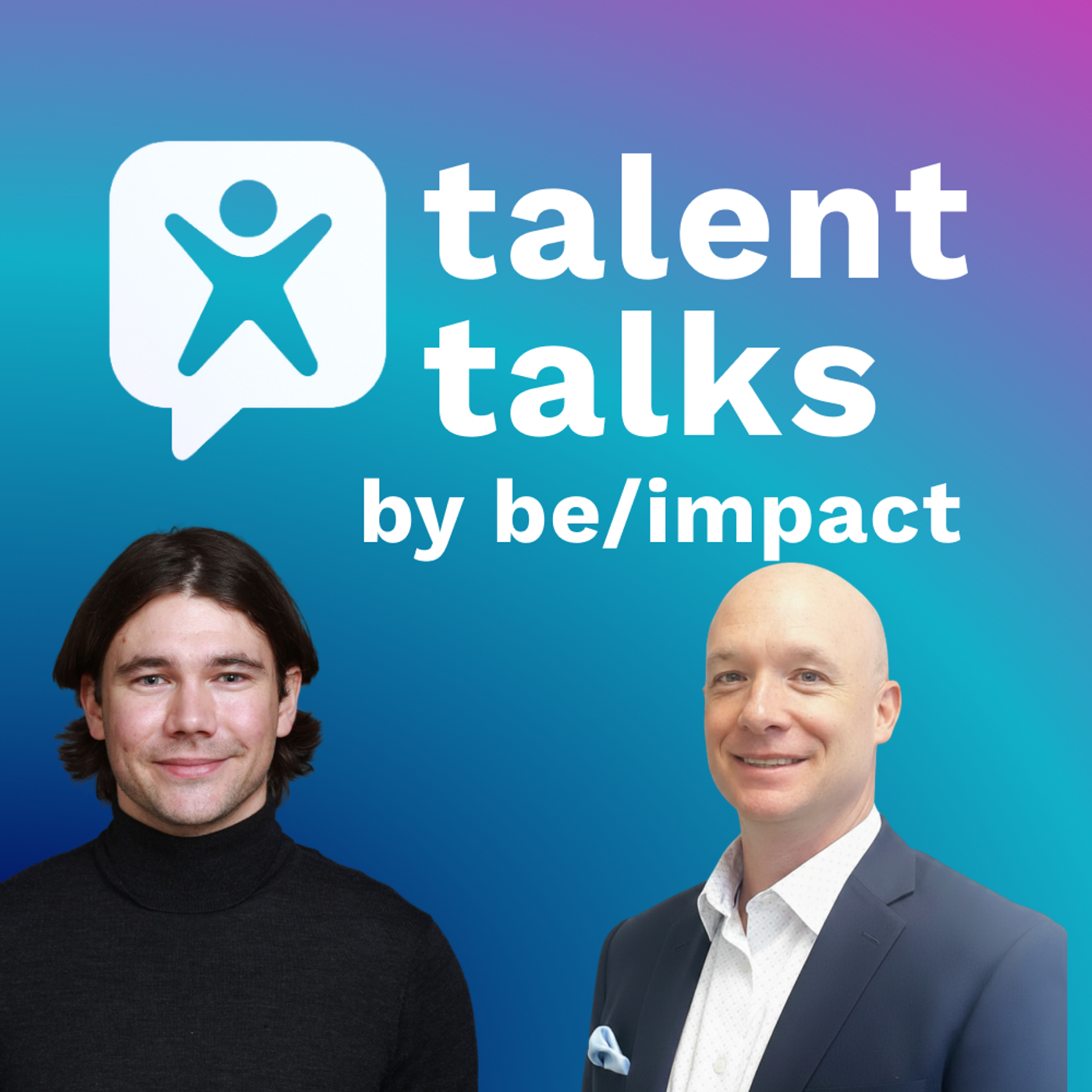
In this episode of Talent Talks, Julian speaks with Mike Drolet, Chief Operating Officer at Six Degrees, about leading through change, building trust, and helping people stay valuable in an AI-shaped workplace. They explore why leaders need to listen before acting, how to turn learning into real behaviour change, and why adaptability, communication, and personalised development matter more than ever.
Julian Buschmaas: Welcome to Talent Talks by Be Impact, the podcast where we speak with leaders across professional services, technology, and consulting about what it really takes to attract, grow, and retain your top talent. I'm your host, Jula Buschmas, the CEO and co-founder of Be Impact. And our software enables employees to teach what they've learned to teams and nonprofits and startups, because we believe that teaching is not only the best way to learn, it's also the best way to create, or as we say, to be impact. And in each episode, we explore how firms are rethinking development, leadership and culture and what it takes to build teams that stay in Thrive. And today I'm joined by Mike Dorle, Chief Operating Officer at Six Degrees in London, a cloud cybersecurity and IT services business. And Mike is a global business operator with a deep experience in private equity backed firms, including scaling organizations, integrating change and improving performance. Now he worked across the Americas, Europe and Asia and he's known for his direct people first style with a clear direction, with honest conversations and a strong focus on high performing teams. Mike, a very warm welcome to start. Could you give us in your own words, a quick version of your path so far and then what your role covers today at the Six Degrees. Certainly. And first, thank you for having me. I appreciate the opportunity to spend a little time and talk a little bit about talent. â So quick overview of my career. â Most all of what I've done has been related to consulting, professional services, and technology. â Often the combination of those three together. I've had the opportunity, I started my career early on with Deloitte. So I've worked with large firms. I've had the opportunity to work smaller firms. â And again, as you said, for the roughly past 15 to 18 years, heavily with private equity firms, working with companies to improve performance, achieve outcomes, etc. I've been fortunate to have traveled the world extensively and worked in countries and with teams all over the world, which I think has given me a better perspective on people aspect, the talent aspect. particularly when you see the differences between different locations, geographies, culture, etc. certainly, again, happy to have the opportunity to talk to you today. Fantastic. â And yeah, that without we can basically start straight into today's episode. first, I would like to talk a little bit about culture at six degrees. And in your preparation for our call today, you describe leadership less as telling smart people what to do and more as figuring out what's in their way and removing it. Where did that view come from? I think I've learned that over the years. I was fortunate earlier in my career to â work with some very smart, talented people. So I've had the opportunity to see what good looks like. And from my perspective, that's one of the things that I've learned and try to keep to the core of how I work. which is no one is gonna be the smartest person in the room all the time. And my job is as chief operating officer, exactly what you said. It's not to tell our smart, capable people how to do their job or what to do. It's to listen, to understand what's preventing them from providing their best effort, from doing and delivering their best work. And then either providing clarity to that, removing those issues, those blockers. helping resolve the issues that are keeping them from really performing. Again, with a career in professional services, â the classic cliche, what we do is our people. We don't manufacture things. And so for us to be successful, our people have to be successful. And that's where I've learned my job is to enable them for success. And that's to understand what's in their way and help remove those issues and those obstacles. Fantastic. And let's look at this a bit in practical ways. If I joined your business organization tomorrow, what would I notice in the first week about how people work together? So I think what you would notice is that people trust each other. I think that is one of the things that, again, I've learned over my career and I try to instill and operate every day. You have to, as a leader, you have to be your truthful, authentic self. And I think in a culture where you demonstrate that and the leadership team continually demonstrates that, the people embrace that and they start to operate that way as well. I worked with a CEO years ago who would often use the phrase assume positive intent. And I think that's what I see in our culture is that sure, we may have disagreements on the right path forward. We may have differing opinions, but we come to the conversation with the view that I assume that the other person is trying to do the right thing. And working from that positive perspective and working from a place of shared focus on good versus entering a conversation or an interaction with an argument or a disagreement. And so I think â if you wandered around our offices, our locations, what you would see, and it's one of the things that myself and our leadership team take pride in, â is the interaction and engagement of our teams and our people, not only video calls and things like that, but also in the office, which is something that we've tried to encourage and something that we continue to work at every week. Finding and encouraging our teams when the opportunity presents itself, get together in person, hold your team meetings on a given day and have the entire team in the office. Working with those people, we encourage them to socialize as appropriate. after work, learn about each other's culture, family, histories, et cetera. And what we find, what I find is when you have that level of trust and you enjoy the people that you work with, solving your own becomes much easier. It works from that same point of, it's easy for me to assume positive intent if I know you and I enjoy working with you. No, that makes a lot of sense. So are there also ways how these behaviors then get praised? â within the teams or even if it's informally? It is. think, again, as a leader, one of the primary obligations I have is to lead by example. And oftentimes that sounds like a cliche and people will tell you, I do that. I think what I've learned is people will quickly be able to tell when you're not authentic. It gets great for me to stand up in an all company meeting and talk points on the slide. But what I find is more important is for me to go sit side by side with teams and understand what's going on. Show me on the screen what's happening. Why does this slow us down? The best way to do that is not sitting in an office or standing in front of an audience presenting slides. The best way to do that is to sit with the individuals and engage with them and understand. And for me, I learn much more from sitting with our teams than I do sitting around on my own. And I think to your point or to your question, what comes back is that you have to actually live that. You have to be that authentic person. You have to engage and make the time and make the effort to sit and ask questions and listen. And I think that for me is the biggest thing is I learn more from sitting and observing and listening than I do from standing and talking and sharing my opinions. And then you have been involved in a couple of companies and I guess the current one is one of those examples that also have been shaped through acquisitions where maybe their focus changed to a new direction as well or where the direction was made a bit more clear. When an organization is changing its shape and culture can often also get a bit messy between maybe new people coming in and how do you keep people aligned without turning it into into a corporate theater? Sure. So you're correct. I've worked in environments where not only is change just that is part of how we do business, â but it also happens quickly. it's often we have to work quickly, we have to move at pace. â I come back to, you have to be truthful and transparent with people with the good things and the bad things. â And so what I often say when I walk into a new organization, a new environment, Whether that's through an acquisition or that's me coming in as a leader. Whenever I walk into that, one of the first things I tell everyone I meet, I can't promise you that you're always gonna like everything I have to say. But what I can promise you is I'll always be truthful with you and I'll be open and tell you what's going on. And I find in situations, even when you have to work through a negative challenge, think of redundancies or layoffs or something that's not pleasant. taking that and owning it and being truthful and open and honest with people, they will be much more willing to work through that process. And I think, again, as I said before, people will see through you if it's a leader who stands up, talks to bullet points, shares things, but if they don't operate that way, if they don't engage and actually do it themselves, people see through that. And so to your question around building that culture when you've got different teams, and you talked about a couple of examples, Another one that I've run into is when you have teams that operate in some portion of Asia, working with teams in Europe or working with teams in the Americas, working through those cultural differences. And part of that is being, again, open and honest and demonstrating as a leader that we don't hide from tough conversations. You mentioned in the intro, yes, I'm known for being a bit direct, but I do that for a reason. find that hiding from problems, putting on the blinders and pretending that something ugly doesn't exist. â That's just going to perpetuate the problem. â I've learned even when it's difficult to be an effective leader, you have to be willing to take those challenges head on, sit and talk to individuals. Why does this interaction make you feel uncomfortable? Maybe it's a cultural thing. Maybe it's a historic thing from the past. Maybe it's something that I would not be aware of. I don't sit and ask. And so I think that comes into play when you're bringing cultures together for a variety of different reasons. being open and honest with everyone and making sure that everybody hears the same thing. So for me, if I get off a plane in the U S or I get off a plane in a country in Europe, or I get off a plane in a country in Asia, our teams hear the same message for me. And I feel like that is very important that you're consistent, you're transparent, and you are who you are. Fantastic. And what I also really liked is what you mentioned earlier already, this kind of hands-on approach and basically sitting at the service desk team maybe and look at the desk to see what's broken or what slows them down. What did you learn from these interactions and what has changed maybe afterwards and how you're processing? Is this something how you always operated or was there a clear moment where you were like, okay, now this is... So two parts to that one. So the first thing, the reason I smile, I first have to calm them down. What often happens when I show up and sit at the service desk or in front of, in our case, a technical knock where we've got screens and teams everywhere. First question they ask is, why is the new COO coming and sitting next to me at my desk? â And so you walk them through. For me, that's how I learned. And I can tell you without a doubt, every single time I can learn more sitting with the people whose fingers are on the keyboard. the people who sit across the conference room table from our customers, the people who actually do the work, I'll learn more in 30 minutes sitting with those people than I will hours sitting in a conference room working on things. And the reason being, those people know how the business works. The good things, the bad things, they understand what works well, they understand what's inefficient. So for me, the second piece of your question, I don't know looking back that I had a light bulb moment where I just said, you know what, I need to start doing it this way. Honestly, where it came from was sort of necessity, right? The classic necessity breeds invention. The point was walking into an environment where, okay, things aren't perfect. There's a challenge, the business is not operating where it needs to be, or a team is not performing where it should. Some type of problem that needs to be solved. For me, I learned that the best way to do that is to roll my sleeves, sit with the people trying to solve it, and then work together to come to a solution. And then my job is to walk out of that conversation and say, now that I understand, how do I, as the leader in my role, remove the problems that are slowing them down? How do I figure out how to get a better process in place? How do I go engage a customer who continues to operate and make our lives difficult? That's my job. It's not to tell them how to do it. It's to understand. and then go help solve those problems. So for me, I've learned it more out of necessity. That's also changed on how the team sees you basically, or as a leader in that. I think it does. And I think â one of the things that personally I pride myself on is that â you would not be able to view it and independently spoke to any person I worked with over my career. You'd not be able to find somebody that would say, know what? Mike really wasn't truthful with me about that. I pride myself that you wouldn't be able to find an individual who could say that. And I think for me, that's just how I'm wired. And I try with my own leaders, with my teams, across our organization and anywhere I've been to operate with that premise. Again, can't promise you always like what I have to say, but I can promise you that I'll tell you the truth. So I think again, the key piece here is you have to demonstrate that. So tactically, as a leader walking into a new environment, one of the things I look for immediately when I sit with the individuals who have their hands on the keyboard, I'm listening and I'm looking for things that I know I can fix. And part of that is because that's the right thing to do that makes the business better. But part of that is giving myself opportunity to demonstrate that I'm good for my word. So if I sit in one of those interactions and the team member describes, Hey, this is a problem. This causes us issues. I look at that and I commit, you know what? I understand, I'm gonna go get that fixed. And then once I do, which is most important that you deliver, making sure to loop back with that person and say, hey, you remember that conversation we had a couple of weeks ago when you told me the problem? Here's what I went and did about it. And that's not self praise for me. The point is I listened to you, I heard you, and I took action to solve your problem. Again, that's my job is to solve their problems. They're not my problems. And so finding those opportunities where you can demonstrate that to your point of, building the view of you as a leader, people start to see, you know what? Mike's true to his word. He told me he was gonna address that. I see that he did. He told me this thing was gonna change. I see that that has happened. If you build that trust, then you have those inevitable tough conversations that come up, right? Something unexpected happens and you have to have a difficult conversation. You've established that foundation, which is, I may not like what Mike is telling me, but I know he's being honest with me and we're gonna work through this. You have to know that over time, but you have to do it No, fantastic. That makes a lot of sense along that. And again, shows a clear line on the honest conversations and how that builds integrity over time. I want to move now more on a topic that is still very much talking about the talent, but in this case, even in the technology based firms, it is all about the people that are building the technology as well. And I want to focus a little bit on the learning and development side of this. Like how do we get the talent that we have in the business and to even operate better? And there is, guess, one topic on all our minds currently that is moving and changing just the way that we work. And that is, I guess, the AI transition. So when you look at the next two to three years, â What do you think are the most important skills that people will need in your sector to stay valuable? I think there are a few. when we, and where I'm now in our company, when we think and talk and look about the future and try to pull out the best crystal ball we can, when you talk about AI, I think there is a lot of hype, there's a lot of conversation, there's a lot of discussion. And quite frankly, it's created fear of wait, my job or this function may be eliminated. AI is going to come and eliminate the need for me as a human. â Personally, I don't, I don't subscribe to that philosophy. I don't believe it. What I do believe though, is that it will change how we work. And so what I think and what I see in terms of talent, that people who are going to be most successful are the ones that can adapt, that can operate in the areas of flexibility, potentially in gray areas. Because the one thing that we all know, pretty good certainty is that things are going to change. â Can anybody tell you exactly what that's going to look like in two years? No. But what I can tell you is in two years, it's going to look different than it does now. So what I try to think and operate myself and what I try to work with our teams on, if you're thinking about where I need to be in terms of you asked learning and development, what skills do I need two years from now? â What should I be reading about going to classes on, et cetera? The thing for me where I come back to is What is it that you're passionate about? What is it that is your thing? Is that some specific type of technology and you're the expert in that, or it's some process that you are very good at, or you're a fantastic project manager and you're able to get results on time. Whatever those things are for you as your role, being good at that, that gives you the opportunity in the future because no matter what happens, no matter how AI reshapes, we in our company Every company is going to have a need for talented, smart capabilities in people that say, Hey, when I look at what my business needs two years from now, I've got a team of people that I know I can count on. They're smart. They're capable. They have engaged in what we're doing. What I asked them to do two years from now, maybe a little bit different than what I asked them to do today, but I've got confidence they can do it because they've stayed sharp. They focused on learning and development. They've taken that interest in. continuing to be the best at what I am. My feeling is that if you're the best at what you are and you strive to be that, there is going to be a home for you in the company, in other companies, no matter what AI or any other technology drives us in the future. That's the key is whatever your craft is, take the pride in being as good as you can at your craft. Fantastic. And so you wouldn't split necessarily too much into differentiation between hard skills and soft skills. It's more almost the expertise that you have within your field and really knowing it. think that's a piece of it, yes. So part of it is the skills that I have, the expertise that I have in my craft. However, the more intangible things, softer skills are going to be, am I flexible? Am I able to adapt? Am I able to take what I know and apply it when things change? â And I think those abilities, whether that's an ability to interact with your peers, interact with your customers, you know, again, we're a technology professional services organization. So a lot of that is those soft skills. How do I engage with my team members and my customers and solve problems and do what we do? That probably becomes more important, but I tie that back to it's going to be the ability to accept, Hey, the way I did things yesterday might be a little bit different tomorrow and that's okay. because I have my skills and my experience and my expertise that I can fall back and rely on. If I have that foundation, regardless of exactly how I apply it or I used to have to work through and do things myself, well, this AI bot has automated that for me, great. That takes one thing off of my plate. So now I can apply my expertise, my experience, my skills in a more focused, more appropriate way. So I think for me, that's how I think of it. It's not. I have this fear AI is going to replace my job. It's okay. AI is going to enable me to think differently. So I need to be focused on, do I have the right skills, experience, expertise, and then thinking towards how do I apply that in a changing world and use the technologies that come along in the best way? That's where companies are going to have a need. No, I fully agree with that, Mike. where this comes down to, guess, right now and this year specifically, I guess there's a lot about mindset. and having that and being part of that versus opposing it. Is there anything that you do within your businesses to encourage people to see it the way that you just described? Are there any, I don't know, policies that you guys implement or any programs or anything that helps them, the employees in your businesses to think about along those lines? Sure. I'll give you a very specific, more tactical example that we employ here. So for all of our employees, we set objectives, whether that's depending on how your organization does it, quarterly, annually. The point is, one of the things we do here is that every employee has one of their objectives that is a learning and development objective. And the key here is that that does a couple of things. One, that makes it the responsibility of the employee to say, yes, I need to go focus here. And the way we do it is to say, you need a learning and development objective. The leader that we have at our company today, she's phenomenal at the learning and development and working with our teams to say, okay, based on your team, based on your role, here's what that objective should be for you. And the point is that nobody needs to have the exact same learning objective as does somebody else. What we don't do is say, you know what? everybody's going to take this specific Microsoft certification. That approach is not effective. What we say is, okay, you need an objective focused on learning development. And for a particular technical engineering role, the right element of that could very well be a Microsoft certification. For someone else, it could be something completely different. And that's the point is allowing and having the infrastructure and the capabilities around learning and development so that individuals can tailor that to themselves. And then the other reason we put it as an objective, the inverse that holds us as the company accountable for making sure we allow time for that, that we support the employees and what their learning and development objective is, that we make sure that they are in a role where it's applicable and they're able to apply it. So in my head, one of the worst things is we have somebody complete a course, go to a seminar, go to do some learning and development item and then come back and not use that. â in my head, I think of it, I took French in high school. â I can speak about this much of it now, right? It's like anything else in life. If you don't apply it, if you don't use it, it actually goes away. So the other piece that's very important. Having that objective in learning learning development, the two ways ownership for the employee, they're investing in what they believe is right for their future, but ownership for the company to say, yes, not only will we support you in doing that activity. we will work with you upfront to make sure that's gonna be applicable to your job when you get back so you can apply what you want. Yeah. And in fear that we already answered this question, but I will bring it anyway in and see if there's the same angle, a different angle to this is, if we take now a brilliant engineer architect or security specialist within your firm and looking at their top... deciding what are the top soft skills that will decide whether they thrive in an AI shaped workplace. What would they be? I have a few to choose from. And I think we already added one. What I would like to understand is kind of the meta one, the one to rule them all maybe. And that might have been the adaptability part that we talked about, but there might be other ones around problem framing, around communication. So explaining decisions to non-technical people, maybe influencing. So getting alignment with authority or other stakeholders, maybe judgment, knowing when or also when not to use AI and rely on this and maybe also accountabilities and in owning outcomes versus hiding behind tools or coaching, helping others then to shift how they work. If we look at some of these, how would you... place them and think about them. I think a lot of those absolutely are important. So adaptability as we've talked about, I won't cover that one again, but I do think a couple of the other elements you talked to were in my list of what I was thinking. So communication, of course, that's probably the one I would put next in line after adaptability because the, where I approach it, so what? Right? Like that's great. This AI tool can do this magical thing and it can do it much faster than a human could do it last week. That's great. So what, where do we apply that? How does that make either our business better? How does that allow us to provide a better service to our customer? How does that allow us to get to revenue faster? Whatever those tangible things that we as a company need. That's what I'm interested in as it relates to AI. That's great that it does these magical things, but if it doesn't help us improve our business being blunt, I really don't care, right? And so the ability to communicate, whether that's to your peers, whether that's to leadership, whether that's to customers, the so what component, which is, yes, we're using this and we're doing it in such a way to achieve, other words, you use this outcome. That is where I think the skills are. And that is, I look at the future. That's what companies need in the talent in individuals and people who are able to take the new world, the AI, all the new technology that's going to happen in the coming years. Take that and turn that into an outcome that is more positive than what we had before. Those are the smart people that will always have a place no matter what the technology does. So in my head, the key, when I put it into the simple terms, it's being able to articulate and demonstrate the so what. No, fantastic. if we take that, and I mean, I have currently a lot of conversations around that. Many organizations are going now into AI training, let's say, especially when we're looking also at â non-technical firms, right? But even within the technicals. And it becomes often, I think, surface level. Like they think about tools or prompts and quick wins. What do you think they are missing and how they then build this real capability? So essentially, how do we get people to understand exactly that what we just talked about using it and getting it clear? So what out of that? Yeah, I think a couple things come to mind. It's asking the right questions upfront. And particularly for me, working within a technology company, are we using technology for technology sake? Because if we're doing that, that's not going to be the best use of it. So it's more, what are we trying to achieve? â What's our purpose as a business? Like for us, we're a managed services technology company. Customers come to us and say, I need your help running this type of technology for me. So for us, we're really clear that that's our objective. And so whether it's AI or any other new technology, does it further our ability to do that? â And so that piece of it, I think to your question, whatever is applicable to your company. mean, obviously it's going to be different within a manufacturing organization, â retail organization, those types of things. But the point being, there is an objective. There's a reason why you as the business exist and what you're trying to do. So it's again, the ability to adapt, to take that, but sitting down upfront and saying, okay, what are we trying to get to? That's a key piece. The other thing that I see both where it works really well and also where whether it's individuals or teams running the challenges, is an inability to adapt when what we thought turns out to be something different. I talk a lot with our teams and organizations that there's a difference between a bad decision and a bad outcome. We could make the best decision, we have the time with the information that we have, technology changes, and you know what? The outcome is different than what we thought. Okay, what do we do from there? That's the ability then to say, how do we pivot? How do we maintain flexibility? How do we change? Because again, back to what I said before, nobody's got that crystal ball. So we make the best decision we can, take the best effort in applying what we're doing. If we find out it's not hitting the mark, okay, that's fine. Let's pivot, let's be flexible, let's move in a direction that gets us closer to that objective for why we're here in the first place. And when we're looking now at the workforce and as it evolves, what do you think is the difference in between or the proportion that the business maybe needs in order of people that are AI literate and AI people that are actually AI capable? And maybe the difference being that somebody who is literate, they know the language, they can try some of the tools and AI capable, meaning that they really choose the right use cases, manage the risk, gratify the outputs, raise the quality. Yeah, so I'll start with the second one first, because when I think about it, it's the AI capable individuals and this ties back to being able to communicate. So what right? So the people who understand what does it do? What is it intended for? What business problems can it solve for us? So understanding and being that capable to then help people have what I would call the appropriate level of AI literacy to answer your question, right? So Not everyone in the organization needs to be an expert on it. You need to have some of those smart, capable people who are, and their job is to be able to communicate within the context of your business, here's how we should be using it. Here's how we should be applying it. And so using AI within our finance organization will have one type of context and business outcomes, very, very different than using AI within the context of how we actually deliver. services or how we automate functions within our service desk. And so the point though is having people who can educate people and say, here's what this could do. How do we work together? Me, the AI capable person with you, the AI literate person to apply this in the right way for your area of the business and recognizing that again, much like learning and development, the one size fits all model. Hey everybody, we're going to use this tool and we're going to do it the same way. you're going to have limited success with that. You're going to have some teams, some functions works fantastically, others it will never get used. And the part, and this is where the capability comes in and the ability to communicate and articulate it. Here's how the somewhat applies to your area and that's different than this area. And that is okay. We don't all have to use it the same way. What's important is that we use it to further our objectives, to be more effective, to be more efficient. That's what counts. â fantastic. That is true. And now we already talk about this, about making people know faster, I guess, with it. And you can just do maybe a job in this kind of weather. But organizations also are working for teams, right? Managing those teams. What do you think changes in teamwork when now AI enters the picture? I think â a few things. So what I see very tactically, it eliminates a lot of the administrative Right? There are hundreds of AI enabled components that can take notes for you in a meeting, that can summarize it, that can give you the action items, that can automatically tell people, here's what you agreed to by this time and here's how to do it. So I see the administrative â use of that every day. That's in my mind, the easy part. â Where we also use it, I'll speak in terms of us as our company. â We see a lot of applicability for it where there is a known answer that we're trying to get to. So if you think about it in the context of technology, this technology component is broken. Okay, there should be a path. You follow these steps. If you do these things, there is an outcome, which is it works again. In scenarios like that, where there is a binary, it either works or it doesn't. Whereas there's that type of outcome. That's a great use of AI and that's where we apply it. where we also then sort of use it in other places is how can it help me assess more information to make a better decision, right? So as a human, and our personal example, Evaluating risks to my business. What are my competitors doing? What's happening in the market where I operate? What's happening culturally or with governments in countries within which we operate? Me spending the time to read all of that information, take it all in, understand it, and then apply that into my analysis, no one would have that much time. However, what I could use is AI to help sift through that vast universe of information within the context of what I need to know to apply and make business decisions and help me focus on, here's the things that are applicable. So in essence, filtering out all of that noise, that as a leader is a case where I want to use AI as... help me focus where I need to focus and help me not be worried or distracted by things that really aren't applicable. So I use those two points because in both cases, the human still has to be there, right? It didn't take â that person, it didn't eliminate their job. It made it so they didn't have to take notes anymore and that's more efficient. So that in theory is more time they can go engage with the customer or with their peers. So that's great. In my case, it didn't eliminate the need for me, but it helped me. get to making the ability to make decisions faster by helping me have the information I need versus the time it would take me manually to do it. So those are the types of things that I see. And it goes back to using it to help you in your job and do it that way. Yeah, I know. â I agree with all of that. So that is, I think, really good advice for people to look into more. And you let... organizations through big shifts before. What's the biggest, coming back to the learning side of things, what's the biggest mistake a leader can make right now when they are trying to move the workforce into a new way of working that involves those changes that we talked about? Not listening. That in my head, if a leader walks into any organization, sits with any team, again, I'll speak personally. I can't possibly know the in and out details of every team in our organization. I trust them to know the ins and outs of their team, of their function, of what they're doing. And the piece for me is to, where I would make a mistake is to assume that I know what the right path for learning and development is. â So not listening, that's the biggest problem. The only way for us to get it right, the only way for me to get it right as a leader is to sit and listen and understand. As we've talked about before, what's going on within those teams, what's going on with, some cases, that individual and listening and understanding and then fitting that into the bigger plan. And so the way I think about it is that â my job as a leader is to be very, very clear. This is where the bus is going, right? That's our strategy. That's our vision. That's our objective. So my job is to be very clear. This is where the bus is headed. What stops we need to make along the way? What turns we need to make? That's not for me to decide on my own. I could, it's probably not the best outcome. I need to listen to the people to say, you know what? We need a bus stop here at this place because there's a grocery store here. Just to continue the analogy. So the point is I can be clear on the big picture and I need to communicate and articulate that. So then the smart, capable people can say, â if that's where we're headed, here's where we're going to need to stop. Here's where we're going to need to turn. That makes us all better as an organization. And what's one thing that the leader then can do once this transition is on the way to make it actually stick and not turn around halfway or fall back into old patterns? You have to apply it and make it part of how you operate day to day. And that sounds very simple. That may sound, well, yeah, that's very obvious, Mike. But I think what I've found is that's much harder to do in practice. So back to the thing, if the example we talked about in learning and development, if we feel like for this particular team, some level of a specific technical training course is the right thing. If we ask them to do that, yet we have not changed our processes, we've not changed or updated our technology, we've not enabled them to use it, we just wasted their time, our own, and it often cases money, if we're not gonna apply it. So again, while it sounds really simple, sure. let people go get training, go increase their skills and then come back and use it. That sounds great. But if as an organization, you're not willing to change the processes, the tech, the operating procedures, how you operate as a business, if you're not prepared to do that, all the training in the world is not going to help you be better. So again, you've got to apply the two together to say, yes, we need to increase skills and capabilities and competencies across our business. However, we also have to be willing to modify our business to take the best advantage of that and those skills and competencies and technical capabilities that individuals have. So again, much like in the individual objective being somewhat of a two-way contract between the company and the individual, I see it the same way here. â The company has the obligation to make sure that we're willing to change and operate to be effective at utilizing and consuming. all of that knowledge and expertise that exists in the organization. Fantastic. And last question to this topic for all maybe younger listeners. If you were advising somebody that is currently still in university or in a master's degrees and they're joining the industry today, what would you tell them to practice every week right now to stay ahead in the AI world? I would say go engage with your colleagues. And so Quickly, if you look at individuals, I see it in our workforce, individuals who have joined the company as their first â position out of university in the last several years since COVID, what they know is a very diverse workforce that works transparent, that works across various areas. They don't know the, hey, the old way of doing things where everybody was in the office, and that's okay. But what I see often gets lost in that, I hear... our employees or an individual will say, but Mike, I can do my job from home remotely. My response is yes, absolutely you could, but there is also value in still being in the office, in-person interaction. And so to the question for young people still in university or who recently joined organizations for their first goal, go engage with your colleagues. Back to my example, I learned more sitting with a team for 30 minutes than I will sitting in front of my laptop reading something for hours. â I cannot overstate the importance of that, not losing that in-person interaction. That is the biggest thing because as things change, as technology adapts, AI comes more into play. Being able to interact, communicate, work with your teams and how do we work together to apply that? That's what will make individuals successful. Again, no matter what the future exactly turns out to be, if you're involved in it, if you're engaged with your colleagues, if you're communicating and talking about what needs to happen, you're in the middle and there will be a role for you moving forward as long as you're part of that process. So go and engage would be my advice. Fantastic. And then. If we could now design for these maybe young people joining the week or joining the business, how would a perfect week for them look like? If you could design the best week for a high potential person in your world, what would it include to keep them learning, to keep them connected, to keep them working on the individual work? So I think if I had to put in one word, I would use the word balance. And again, that sounds very simple. That sounds, you know, very, very easy. It's not in practice. Right. So what I often see new people entering the workforce or younger individuals joining our company, right. They want to jump headfirst into their crap. Right. So that's in front of the computer, on my laptop, whatever my role is. Right. I want to do that. I want to eat, sleep, drink and do that every day. That's great. That is a key component. However, if you're not, again, engaging with your colleagues, if you're not carving out time to say, hey, even if it's something simple in the morning, in the break room, talking and engaging with people, you'll hear conversation, â you know what, let's talk more about that, or, you're having that same problem too, let's discuss. So for me, one of the things is you've got to focus absolutely on your crowd. That's your job in a simplistic way, right? That's what drives your paycheck. You've got to focus there, but. You need to carve out time to interact, to engage, to work with people. And you need to carve out time around that learning and development. again, very tactical. One of the things I tell our employees, treat learning and development like annual leave. What do you do if you're going to go on annual leave? Well, you put it on your calendar in advance. You coordinate with your coworkers how work is going to be covered. You make sure that customer commitments or internal commitments are taken care of. And then that allows you to focus whether that's an online training course, whether that's an in-person session that you're going to, whatever it is, carve that out and treat it just like you would any other thing that's important and manage it as such to ensure that it gets done. So one of the things again that I see very often is â new people that that energetic, I want to be the best as my craft as I can. Fantastic. However, don't lose sight of those other things that imbalance will make you much more effective at your role. will make you more valuable to your employer, to your company, and will ensure again that as things change and adapt in the next couple of years, you've got a seat at that table because you're part of the process, because you're engaged. Fantastic. And then Mike, last question for today and one of my favorites, which is, if I give you a magic wand and you can change one thing about how organizations approach learning and this culture of growing and leadership, What would you change first and why? â I think what I would probably change first â would be getting rid of the one size fits all model. And â I don't mean this in any disrespect to the many great organizations out there that have learning portals and those types of things. However, they are very often the one size fits all model. Right. And so what we struggle with as a company, if I were to go use a learning and development platform, I'll use that word broadly. That would meet all the objectives for all the skills that I have in my company. That would probably be 75 plus different things, right? That that's not sustainable. And so again, I think for me, I would change this, this mentality and I call it old school, call it historical, whatever. Hey, we have a learning and development program that's good enough. It's not. It has to allow and cater to the needs of individuals at the individual level. That can be within a platform that has various things. However, this willingness or this view of leaders to say, we'll just go buy an L and D platform and our people will use it. So we're providing opportunities. Not nearly good enough. I would get rid of that and say, know how do we engage at the individual level to say what is applicable to this role, to this individual and do that in a way that then rolls up. So as a company, I'm not spending money on 75 different platforms. That piece in the middle, that's the magic, right? That's the secret sauce is how do I make it so individuals are getting what they need and that benefits my business as a whole, but yet I'm not having to go manage 75 different things out there in the universe. Getting that right, that's the tricky hard part, but that's where if you do, if you get that right, you get the best results. Well, thank you, Mike, for those, for those ending words. â I really enjoyed that conversation. think our listeners also can take away quite a few of the big themes along the clarity about direction that you're heading, staying on course once you made that decision, embedding changes that you're making into the day-to-day operations. of the people and having that focus on enabling people on AI and really building those capabilities rather than just creating the literacy, but also understanding that there's different levels and needs needed for that. And I guess that learning is personal and that we need personal interventions for that. Thank you for having me. If listeners want to connect with you, what's the best way to reach you in case? The easiest place is to find me on LinkedIn. One of the benefits I have is a relatively unique last name. so finding my trolley on LinkedIn, my profile is there, likely the easiest way. for me, if something I've talked about today helps somebody, that's fantastic. I've had, as I said early on, had the benefit of learning and working with some very smart people. â If something I have or know is useful to somebody, then fantastic. Always happy to engage. Fantastic. And then to everyone listening, thank you so much for spending time with us. If you want also your teams to retain what they learn or by using it in the real world and build human skills that matter for teaching others, you can find us on the impact at code.uk or reach out to me, Derek as well via LinkedIn. or via email juliann at bimpact.co.uk. Mike, thanks again for joining Talent Talks. It's been a real pleasure. Thank you.