
 Apple Podcasts
 Spotify
 YouTube
 Talent Talks with Yv Corbeil: Creativity, curiosity and AI at work

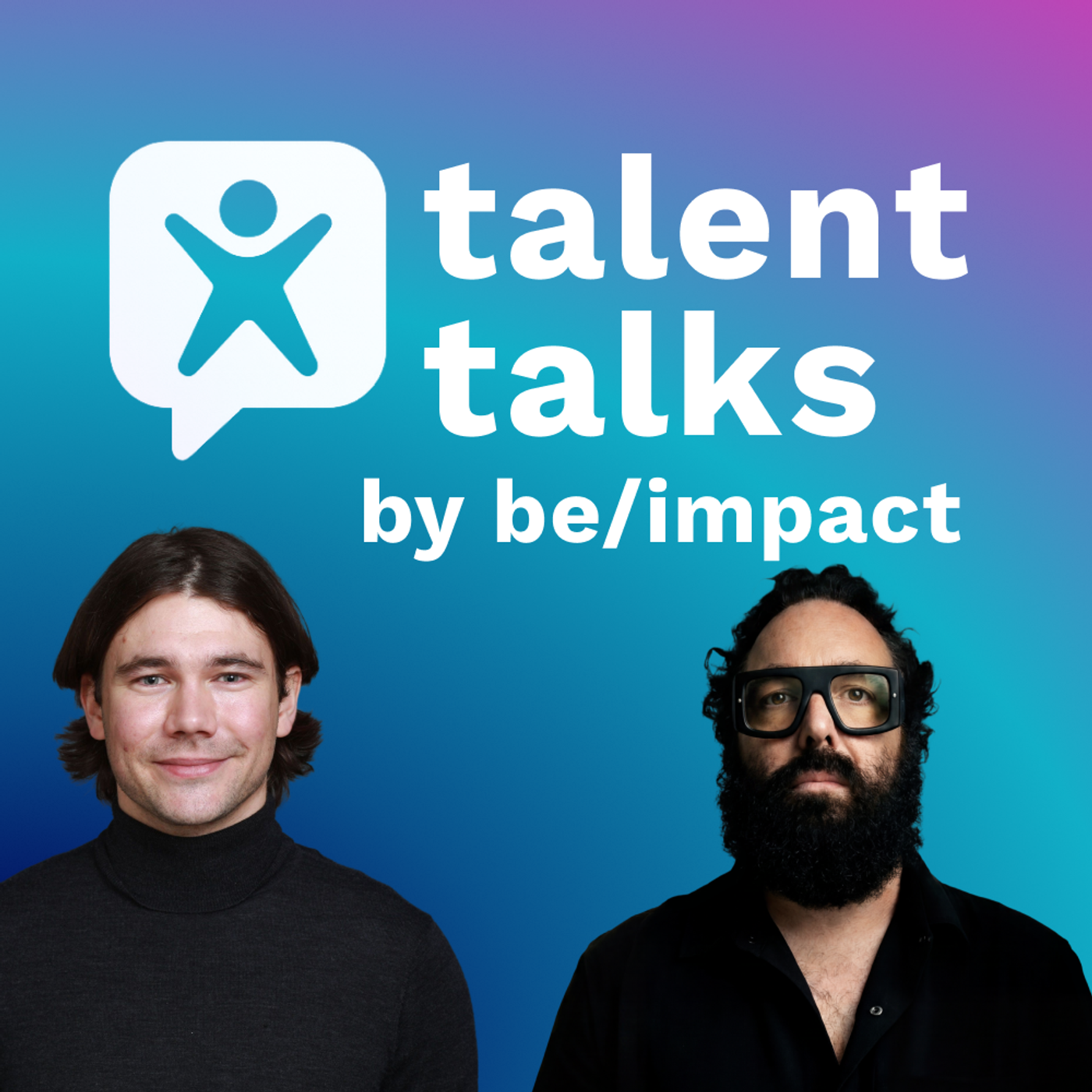
In this episode of Talent Talks, Julian speaks with Yv Corbeil, Managing Director & CCO, ExCo member at Niji, about how AI is changing creativity, careers, and team performance. They explore the shift from AI literacy to AI capability, why curiosity is becoming the most valuable skill, and how leaders can create cultures where people experiment, learn, and thrive.
Julian Buschmaas: Welcome to Talent Talks, the podcast where we speak with leaders in professional services, technology, and consulting about what it really takes to build teams that stay and thrive. I'm your host, Julian Buschmas, the CEO and co-founder of the Impact. And our software enables employees to teach others because we believe that teaching is not only the best way to learn, it's also the best way to, as we say, create or to be impact. And in each episode, Yeah, we focus â to learn more about how we attract, retain and develop top talent. And today I'm especially excited to have Yves Corveille with me, Managing Director and Creative Director at Niji. What stood out to me, I guess, in your career is not only have you lived and worked across six countries, you started your career in copywriting and moved your way through marketing. But you also, I was interested, I guess, in data. So you started at some point working with Blizzard Entertainment and mobile games because there was a lot of data â to be observed. And now, I think since around five years, you're the managing director at Niji in Paris, leading around 1,400 people. And yeah, through a big transition phase as well, I guess, with AI coming into the workplace. And this is, guess, where our conversation today focuses on a lot. But as usual for our audience, it will be a very relaxed conversation. We cover four parts, bit of company culture, â employee development in the transition of AI, â purpose at work and our quick fire at the end. So yeah, â welcome, Eve. Welcome to Talent Talks. If you could start giving us a little bit, yeah, your story in your own words, how you got. to where you are right now, what you do at Niji and what's focusing, where you're focusing on in 2026. Thank you very much for having me. â Indeed, as you said, like I started advertising, advertising craft back then and back in the days, it was all about craft, execution, creativity and the output. And I slowly moved to organization level redesign. And that is for me where creativity can really thrive is when you allow team and people to experiment â and to do without asking permission. And that is now like what I mostly do at at Niji. So I am a managing director on the board under a CEO. we're nine out of 1400. And â I'm chief executive officer because I really enjoy it. I am creative from from ever and I will be forever. The big difference now is creativity used to be the output, but now with AI, creativity is also how you do the input and how you build systems and how you build workflows. And so what's top of your mind 2026? 2026. We've been talking about agents for quite some time. Still, some people are making mistakes between an assistant and an agent. We do not at Nici. We are â really into the agent pick â mode and agent. platform for both our clients and some of our clients were working directly with their platforming and then internally. So as of now, and the creative that we have, the developers that we have, most of them already have one or two agents helping them along. So â today creative devs, professionals and experts that we have really is about working alongside an agent. Fantastic. That maybe is a good transition into the first topic I want to start talking with you about a bit more, which is culture. And I guess company culture is always something that is not easy to put on paper or even in words. it's constantly changing and shifting as well. Currently, â when Niji is at its best, how would you describe the culture? Culture is something that is indeed evolving. Like, Niji was founded in 2001, so it's like 25 years strong. The culture overall remained the same with core, core values, and that is important as well, as management and leadership evolves as well during those 25 years to maintain those core values. The culture for me is really about the people that composed that company. Now we have a lot of nationalities. We have a lot of the official language of at work is French, English and Spanish. we got like, â we bought a small companies in, Spain and in, Morocco. but overall, think that the diversity allows for â a melting pot of culture. That is, that is quite interesting. the, what we want and what we ask from our employees is that they, â if they have, if they dig it, that they take initiative and they take it with impact. They can transmit as well to the collective is very, important. As you, as you said, like teaching on the peer to peer is very important because not only for the one that received the training, but also for the one that gives it, â it gives purpose meaning. though that is part of the culture, a lot of companies are talking about empathy. I like the word. I don't think it's the best for, â in, in, in company and professional life. â consideration is way better for me. Consideration is empathy and being considerate of a situation to a certain individual. Consideration is merit-based where sometimes empathy is to the masses. Talking a bit about your own experience as a leader then, what were some of the values that somebody taught to you that define the leader that you are today? And how does it show up in the way that you now lead your teams? Is there a story you can tell us about that? I think that is something that you either are wired to be a leader or you're not. Management is something that you can learn over time. From a very young age, I've been taught and what I understood, you might have the best idea going forward, but if you're not able to make sure and embark people on the journey, well, that idea will soon stop. And then to share the decision is very important. Even as a leader, can point away the North Star, but at the same time, you need to share the decisions as if people are also deciding alongside that group effect. Even if as a leader, you're the point of an arrow, the arrow still is, the triangle is still necessary. Okay, fantastic. Yeah. So it's about influencing. When you observe your teams, when they work at best, what is different to those that perform averagely? Like essentially what makes the great team work great, great output versus an average output? Like what are these kind of secret ingredients for that to work really well? A lean team. think that teams that are too big, there's too much compromises, too many compromises. Lean team, people that are enjoying what they do, really enjoying, but also enjoying the others on that team. So it needs to be personalities that fit, but also people that share a common goal or a common passion towards the work. â And this is performing. If that connection is between those team members, regardless of individual talent, usually those teams, what I see is they perform better because they go the extra mile, they do the extra thing, they share insights about what they do or what they're doing and how they did it rather than having like the best talented, most talented people. But if there's not that connection. So for all managements and leadership, we do a lot of personality tests and we make sure that those personalities are wired and work well together. Okay. So a lean team that is personally connected across, including these dimensions, personality types on that. Okay. Fantastic. And when we look at an individual itself, did you have the moment when somebody joined your company or were working with somebody and be like, â wow, that's a top performer? And if so, what have they done differently than maybe somebody else? Over the years, I've got like, yeah, we are like a few of those, like high performers â and different fields and different, different type of craft, whether they were like a creative, â strategic driven marketing, it could be like a developer. Sometimes you identify that when the interview process and you say like that, that is some, someone that I really, really want inside. And sometimes it's true, sometimes they are high performance and sometimes it doesn't happen. And on the contrary, sometimes you hire people that are great, but that they reveal themselves to be a very, very high performer. And that is what I'm most â leaning into and more interested in because now the organization allowed them to be a high performer because individually they can have high potential, but that potential is unlocked if they're in the right... system of enterprise, the right place, overall the right organization, not just the right enterprise, but the right organization. And that's as of like the last few years, that's really what I've been into is organizing systems and making sure that those teams and those individuals on the teams can really, really thrive in what they do best. Let's talk a little bit more about that then, that goes also a bit in the direction of empowering employees to show up. best at work, guess, on developing them as well in that context. Where does that, where does that go wrong? When does it not work? I think the key is that it never goes wrong or never not work. I think the basic, the basis of it is people are allowed to make mistakes. That's the one thing that quite a few companies that say, â here we are allowed to do mistakes. A lot less really mean that. But for me, it's just, for me, it's just the basis of it all. â I think that you reach the level where things go well and go fast and go better and forth when those teams can take initiatives again without asking permission. And when you have that level of, not only for managers or upper echelon in the hierarchy, but really from a team level, they can do initiatives, differently. So you give them like an objective. And they reach that objective either on the workflow that you've put into place. So, which is very reassuring because it's a safety net. If they follow this, then it works. And they can also try different ways and then it might go slower or faster. If it goes slower, they go back to the original flow. And if it goes faster, they just unlock something faster, where in turn we can actually integrate in the overall organization. I think that when you reach that level and this is not a top down, this is a felt. mindset of yes, I can actually do things, no permission required, and then see what it goes. How is that behavior rewarded? Or how do you incentivize and motivate for that? Depending on the level, well, it goes faster for promotions. You've got sometimes exceptional bonuses that are delivered. When the workers, we've won like a lot of awards in the last few years. on the international stage in the local and regional. So the teams that are on those projects are rewarded pertaining to the awards that we win. â Again, there's different things. So you have like the promotions, that's the classic one. You've got the recognition â through money. You have the recognition inside the company. You have the recognition that we've got some high potentials that are rewarded. â For instance, I will personally, teach and coach them for pitch presentations or from a career evolution perspective. Some others will be with higher management as well as a mentor. So this is allowed for like people with higher potential. So one recent initiative as a concrete example is that we have a ambassador of Niji. So it's the voices of Niji. We've got 40, between 30 and 40 professionals like Niji employees. that are identified on LinkedIn, that are propelled, that they have specific and dedicated training for reaching higher visibility for us. And again, these are very formal, almost, incentives. Is there anything that informally, just in the way in the day-to-day, then how the teams work, really encourage that behavior? Because again, it is unusual. I know from a lot of... examples that especially junior people, when they come in, they usually bring the ones, the new ideas, because they're not been corrupted too much by, we have been doing it and this is the system. But I feel like there's a lot of fear usually, especially around the middle of the project manager that just needs to get this done. And it is the client work that usually where you then go the risk-free version and you go like, now this is the way we do it. So. Again, even for the more junior, how do, maybe there's just some rituals or it is just because it's communicated the whole time that this is where we do different. Yeah, I think it's felt. When we reach the level of being a mindset, that's the toughest to reach. it's felt when the juniors come in, they see that around them. So very, very soon they mimic. It's a basic principle when you're a junior or an intern. You actually mimic what you see around you. As soon as you reached and as soon as you succeeded in having this, and if usually the mindset of all of this is allowed, usually it goes well. Project management also needs to understand, it depends on the objective. I give them and we give them the objective of having the highest quality possible, meaning in the code front back or the creative aspect of it all, the strategic aspect of it all. So being the quality is the first and foremost objective. Then you cut less corners. And because those project managers, we've got examples as well on big teams working on a big project, time to market 14 to 16 months. So this is something that you need to nurture the team. So for instance, we have teams across France for the beginning of the project, we would travel them, like get them all in Paris, spend a night in Paris, visit the client HQ, meet with the clients. So back. when they go back in their, â and their regional offices, they still have a link with the client, although they are developing or coding. So this is one thing that I like that really, â make sure that the teams are, are, are bound together closer. Nice. Fantastic. When I joined your industry, I'm out of college and I want to get started. What are the skills that I need to bring with me and how, what are the skills that Niji â is helping me to develop on the job? When I arrived at, at Nijee six years ago, I really increased the level of English required. it's no, it's a no brainer. â because sometimes in France, English is not the, â the, the language that is the most spoken. So it's a no brainer. Like as of now, if they are not fluent in English, we don't even look, â the world is fortunately or unfortunately, â English driven. So yeah, â English, the real skills of, of the juniors. Um, no longer do we look for AI literate people in AI. You have two different types of candidates or individuals. have AI literate and you have AI capable. Okay. Yeah. A year ago, we were hiring AI literate and no longer. only hire AI. For our audience. you want to quickly define literate versus capable? Um, AI literate, they've like, they know the tools, they know how to use the tools. They know how to prompt. inside the tools, because AI today is mostly conversational. So they know all of this. â They know to use connectors, they know to use nodes, they know to use MCPs, so all technical language, meaning that it's a very expert, sophisticated knowledge of the tools. AI-literate, that was one year ago. AI-capable is now you take your own work, what you do, â creativity, strategic level, and then... It's no longer about the tools, but about how you create systems and design flows or creative flows based on those tools is how you work alongside an agent and not knowing how to prompt something. So this is a different, different, different layer. For us, those are the most valuable individuals. And I thought at some point that it would be the most senior that would become obsolete the first. And actually it's not really, it's not really the case. We have senior people that are really AI capable because they know the trade from inside and out. And then they use AI to redefine that the organization itself is being redefined. It's not just like, AI â is not a tool revolution. It's a organization level evolution. And that's very, very different. Yeah. Let's go a bit deeper into that. When we look at the entire organization than in itself, roughly where are people then more on the literate, more on the capable space? And if they are more still on the, guess, many, companies are even far away from being on the literate side of things. What taught me a bit through that transition, how it would look like starting from zero to literate to capable to where we want to be, I guess, with the organization. What's your, in five years, where are we with that? I don't know if it's five years or five months. Okay. Fair enough. Yes. goes very, that the worst thing for a leader is to think that they know everything about AI. think the worst thing for a company is waiting until they figure it out. Yeah. Because they are, the moment they finish that sentence is they are obsolete. So you need to like to do a lot of try, try an error. â The levels are, it is our responsibility as a company to make sure that our employees, the people that we're working with every day, that they are upgraded to that level of AI. As long as they want, then we are providing the systems, we're providing the tools, we're providing them the training level for them to be upgraded. And this is like a basic responsibility as a company. Now you have this and you also get new people. that are already AI capable. not only to go further because when you recruit, you recruit for the future for the three, four years coming. â And that is â also like a nice effect because those new individuals can actually exchange and share a lot of things with the more established existing employees. Which indeed can share back more about, I guess, the context. The context of the experience as well? Of the company, yeah. Yeah. How important is experience? Last week, had like, we have an intern and he was working on a project and a very high level project. So that's also why I was like looking at the project. That was the intern and there was a lean team, but he ended up being by himself for a few days. And what he came up with was outstanding. â Outstanding in the quality, outstanding most in the way that he got to that output. That's why I was saying like creativity is not only the output now, it's not only the result of the execution, but it's how you get there. That was very impressive. Impressive to the level of back to the recognition, then we've asked and I've asked him to do like a presentation of what he did and how he did it to the entire company. So that's very different. That guy is an intern. So experience is limited because he's an intern, right? â But the way that he taught, the way that he constructed and he looked at the project and he built a system and a flow that could allow him to go towards the end, the faster and the better. AI is a creative exploration tool. Before you would have time to explore five different directions. Now it's hundreds. So out of hundreds, well, usually you get a better one than the initial five. Did he know that he created something good in terms of the quality of it? Or was that then the experience layer of people being like, oh wow. Yeah, it's a good question. I'm not sure that he understood fully what he did. Yes. Okay. So that maybe comes from... He's clever, so he knew, but I don't know if he fully understood like how much of a disruption and a shift. And did he bring to the company? really liked that idea of bringing in the new capable people and having the ones and upskilling them. Now you said one crucial thing there. They need to want to move on. And I think this is something we had in our intro conversations where we talked about fight and flight, freeze versus actually doing something back. When you look at the, again, at the full, it doesn't need to be necessarily in your own company. â but maybe across the industry, where are people mostly, they mostly excited at a mostly freezing? How do you, how do you see that? Before it was different layers of different types. Now I think that it tends to be like two categories either you embrace and you thrive about AI and what it allows you to do. And that category has different levels, different asymmetrical. levels of sophistication that you have, but that's one big category. then there's the other one that still resists and freeze because they're scared, which is normal to be scared. â But in facing fear, you can either resist, like freeze, or you just, you're still scared. But you go, you move, you move forward and because you have like â people on your team and people around you, then it's less scary because you are not alone. The scare, like the fear becomes very strong if you're by yourself and alone. Any initiatives, any thoughts you guys were thinking about to decrease fear on that, to break that silo, to make people not feel lonely then on that journey, I guess. We have something called the Nijie University. where we have an extensive training school, academy if you want. And then we provide the training. Again, that training is provided, but you need to want, right? Now, how do we domesticify and make sure that people are less scared? Well, it's also through management. And there's one key thing I think that they need to want, but also as a leader, as a manager or as a leader, you need to make sure that they understand what's in it for them. Yeah. And if they understand what's needed for them, usually switch them to, I really want to embrace and I really want to explore. So let's say we have somebody, they had made that switch and they go into a university. What defines a good learning program from one that is average and one that is failing? So if they are in any school, if they are doing any training on a tool, that's failing. Because the tools, like one of the first project, AI driven project that we did was back in 2023. It's not that long ago, then it seems like ages. Yeah. Ages. then during that very first project, which we, we, we, we want to know what for this, like the best project in Europe for our very first project AI and at Nijiba. During that project, there are two tools that we were using that disappeared. Just stopped from day two. Yeah. So you need to adapt. You need to, to be very flexible. and so learning the tools is a fail for sure. What do need to learn? asking better questions. So when you go for a AI something, you need to ask yourself not only what it does, but what can it does for me in the flow that I have? Can I connect it with something else? And then it's no longer a tool that somebody that uses mid journey or wavy is pointless. Somebody that like as a flow or develop an agent doing things for him, then it's, it's augmented. â so yeah, for me, that's, that's failing. Well, we, well, we also do like, so I, â I architected, chief architect, â something that's called designer AI. this is, â it's, it's quite important for, â our designers, our creatives and our front end developers as well. â this is not a series of tools, but this is really a design flow that embarked from the very, very beginning. When we start a project, whether it's be a product, an app, website, platform, regardless of the project, and then in the inbox, the entire flow between the very first brief until the delivery and then the backend. So this is a organization level, um, No, makes, that makes perfect sense. Now, um, we talked already a bit about the shifts within the business, within, within new ones. A little bit also what you are looking for when you hire, which was English and AI capable. What advice do you have then for people that are going into their career right now? What should they focus on? How do I impress an employer in this job market? We would rather hire someone that we feel has a strong will. of doing things and doing better things and that is excited and â passionate rather than like just an expert of something. Because an expert of something is an individual. The person that is really curious, curiosity, think it's the most thing. That's the one word, regardless of what they are studying. How are we testing that? In person interview. Favorite question to ask? I guess it's on the, usually I do less interviews now. When I do like, never ask questions about the work, never ask questions about the resume. And I guess also it's easier because people have done it for me. but I ask about what they did last weekend. And then it starts with like, â I was like improv and then I'll say like, cool. Improv. always wanted to do that. And then it seems that from this, can link back to the work. it's about curiosity. Sometimes you get it wrong. It happens. It's recruitment is the toughest thing. Cheers to all the HR recruiter. That's very, very tough. But... it's very difficult. And it's also, when you think about it, it's the one thing we cannot teach. Everything else we can teach. But the one thing is curiosity. It's the way you're wired. But aren't we as humans, by nature, curious? Well, I've met non-curious people. Okay. Not everyone is curious enough. Exactly. Might have curiosity, but no, not to the level that we required. What's holding people back in times of AI right now? There's quite a few things. So we've got the clients in the banking industry and now the AI there on the organization level. â Again, not a tool, an organization level is very difficult because when you touch the legacy, AI doesn't really. So you've got the... privacy, you've got the data where it's all stood and everything. those are bigger questions. So lawyers are taking the big chunk of that. And as a result slows down whatever needs or would need to be. It's getting so, getting it. So that's the regulation. Like there's the, some of our clients are convinced that AI will do everything. So that's a conviction and no longer can you say like, â not really or. they're convinced. it's up to you, up to us, make sure that it can. But the conviction doesn't end. And internally, their clients, that's where we have value because we go in and then we help them from the consulting part and the creative part. We help them put into place those processes, those inside their organization, that we can help them like top line and bottom line as well. How are those conversations going? How easily? Can somebody in your very technical world, and I guess your workforce is fairly at the higher end, at least from all the people I've been speaking with, skilled and capable, guess on the AI. How does that conversation go with people that are maybe less capable just yet or even less literate? If we talk back to those two words from earlier. I think it starts with like non-technical language. It's no longer a storytelling. Not so long ago, you could have like storytelling linked with AI that would go. of now, you really need to have references and current examples and results, KPI driven. then AI is deployed when there's real KPIs. And KPIs can be very like various things. We are building agents to deploy inside the companies to our clients. So again, we've got those two levels. We did it for ourselves. And we solve all the issues that are, cause our clients, most of the, they are bigger than us. But we, on our scale, cause we work a lot with the CAC 40, so the top 40 companies in France, stock market. So they're way bigger than us. But we solved all the issues internally. So we can also like transpose very fast. They say like, oh, that's how you can actually manage those same issues. We talk about skills and. capabilities now, but how did that influence the job itself or maybe even hierarchies of jobs? a very, good question. I don't think that the ladder still exists. think AI just like revolutionized the, the, low, the old ladder. It used to be like, â intern junior, confirm whatever the word that we invented â expert. then like, that was, that was the corporate ladder. Yeah. And some people are, â were, â used to be like very happy at a certain level and stay there. Exactly, less challenges, but they're very happy and they're very good at that level. That's the traditional one. Now it no longer exists. Again, you asked the question about like curiosity. The one thing that we check as well for like candidates and from people inside the company as well, when we think about promotions and what I usually say, we need to have horizontal professional. used to be like experts of their field, their craft, they know everything. Now it's very much into horizontality, it's poly competencies. It's very, very important. They do a bit more of right before what they used to do and they do a bit more of right after what they used to do. And because of that horizontality, they become like part of a system, part of a chain rather than a single atom. No, that makes sense. So it's less of a ladder. So it's no longer a ladder. And then again, like I thought that the... At first I thought that the senior one would be like obsolete before the junior ones. Sometimes it's not. Sometimes you have junior ones that are candidates that are already... How progression work then? How do I progress and level this? How do I get new responsibilities? Or do I just get like this intern that you were referencing earlier, you just get like a lot of responsibility very early. So there's two schools here. Sometimes you would wait till the person can actually do exactly what the job... responsibility or level of hierarchy requires. So that's one way. And it's, think the safer way, because you wait till you can prove exactly. then you give the promotion. I'm on the different school. I identify a potential and I give the promotion and then. They prove you wrong or right. Exactly. So they can be totally wrong, fair, but it's when it's right, then it's more than better. there's a period of time where you would like make sure that you mentor that person into the role. you give the promotion right before they can actually do the entire role. Because when you give the promotion and like that person knows it all, well, it gets bored very fast. If gets the promotion and it's a challenge and it favors the curiosity and the going further every day. That's currently not working with all of that. change, where are the biggest like challenges in the industry that you see right now where it's just, yeah. What is still very hard to solve right now? There's a few things, the speed at which â I see or we see our clients. This is something, this is something hard because we're really much in advance. And, and sometimes we see what could be a solution, but they it's too fast or too far from them in the future. â so that is a tough thing because you, still do, you still need to have conversations to, your earlier question to have those conversations about proving and projecting them into what could be, â telling them that the way that we think today about it will not be true tomorrow. So that requires trust. So it works with our historic clients. We've got several clients that we've been working with for years. So that's easier because we have that trust. â but otherwise that is something that is, â that is quite, â quite, quite difficult. Speed, speed of embracing change. Not only speed at which do you deliver something, because the companies that are investing in speed now velocity will be using the wrong systems and the wrong tools in six months, but they have the speed. now the company is moving faster. regardless of what the new thing will be. I guess that's really where the regulatory businesses are at disadvantage right now, but also where they're protected by the same cost. Unless there's a new player coming in and doesn't have the legacy and just like turn the table. That's why we've got solutions internally. had the same issues because we're treating data and confidential data. But we sandboxed the entire thing that we do with AI. So we have our own sandbox. The entry prices is high, but we chose to invest. So everything that we deploy is on-premise based. So it's sandboxed. So nothing goes back. I wanted to shift the conversation a little bit to our last topic, which is a bit more purpose at work within all of that. How do you define purpose impact within for yourself, but maybe also for the business and how has that shifted over the last years? It's interesting because from one purpose, can transmit also purpose. I'll give you a very recent example. My son had a â internship, very â young age internship at a game company, casual game company. And they had like a program for him and the other interns. â That was amazing for five days, amazing. And then I realized that what we did, we have like several interns every year, quite a few. But for my part, the one that I'm taking care of most, we did not have that very strong built... â process or a program for interns. So this is something that I really had purpose for me, because I think that it's very important for the youngest. And what I'm saying, I'm talking about is like 15 years intern. So 15 years old are kids. So we did integrate the program. And then I gave teams for all the presentations that were not related strictly to their field. And at first people didn't understand why they would do that or why they had to do this for kids. We could just show them like skills on a computer. That would be enough. But that was very different. That was like a influence of design between Middle East and Europe. We've got one designer that is a Vietnamese. So how do we design from left to right? All those things that are like a world opening. And then the feedback that we had after we did this for our first cohort of four is they failed purpose. They felt like now they were part of transmitting something regardless, because we had like very junior people and very senior. And you mean your own employees that were providing those? Yes, yes, yes. Exactly. So that was purpose for me. That was very, very important for me. And then transmitting that purpose to others. You mentioned in France, which is quite different here to the UK, you have a government program actually that supports businesses to also give back to the communities because they pay for the time. I guess that the best employees spend outside of the business working for social causes. does that work? They don't really pay is that if you don't do it, they give you a fine. Okay. So it's mandatory. Yeah. Slightly, slightly different. We do have a system of, of, of free work, not free work, but giving their talent to like, uh, organization NGOs. So that we have. And what we try to do is structure. we create those small teams that can work on a project for an NGO that is registered. That's â the overall team is government driven. the way that we implement it is a company level. We chose to do this. I find a good re return also because we are a CSR driven company with a mission. And I really find like objectively that we give back not only to the regions, cause we have like a lot of employees that are not only in as if in the UK would not only be like in the in London. but around the UK, so we do the same in France. We give a lot to those NGOs that cannot pay for our. And it's really delivering skills, right? It's not necessarily hands-on volunteering kind of activities. Exactly. It's really using the skills. What would your advice be to other leaders around that that are thinking about designing a program such as this? What are the benefits? What are the pain points? Where does it not work as well on that? Doing it by yourself. does not work because from scratch is extremely, â extremely tough. And also at some point you need to reckon that it is not, it is not our job to do this. â so you need to like, â focus and, and have like partners that are specialized in this. So for me, that's the first right get-go decision. Like I have a company that does that and base, â your values and how you want to communicate about it based on, that system. And that allows you to go at scale. Because you don't want that to be a small initiative for like 50, 100 people. You want that at scale. And at scale, you need a system that â is well into place. Fantastic. Any favorite project you had to from that? We have a project that it's for the, in the hospital, the kids that are sick. There's a quite a well-known program in France where â There's nurses and everything they have like they come with plush toys. go with like, uh, we, we design like they're all digital. We do a few things with them. We did develop their old digital platform. So they, come in, they have like games on iPads for, uh, for an execute. Um, and all of this, we've been supporting that company, that NGO, sorry, for like over 20 years now. Oh, wow. it's a real commitment the start. Actually right about from the start. Okay. Fantastic. Well, coming to our last part. Yes. a quick fire, quick answers â to quick questions. One word or one sentence. Exactly. All right. Are you ready? Yes, I am. Shoot away. What do great leaders do better than others? Clarity. â What's one talent mistake companies keep on making? Tools. Just focusing on tools. What's one thing... that in talent development that you would stop today or tomorrow. And what's one thing that you would double down on in person training. And then what I would double down is, is MOOC, MOOC based training. Because this again shows curiosity, will, and it's based on how fast you want to go. Fantastic. Do you want to define what MOOC is for people? MOOC is a massive online way of getting a training or a class. Um, it's up to your own pace. still have a program, but it's really based on the individual and individuality of training is something that, uh, that I think is well. Fantastic. Um, in 2026, what's the most valuable skill? Um, curiosity. And it was true in 2025 as well. Fantastic. And then last, what's one belief that you might change your opinion about in the past two to three years? I used to think, yeah, about last two years, I used to think that â AI had the brains and we had the smarts. And now I do believe that we have both the brains and the smarts and AI just became automation. That's very different. Yves, thank you so much for thoughtful conversation. I learned a lot and I hope our viewers learned and this audience learned something as well, something new. If you enjoyed that episode, please don't forget to like, subscribe, comment on this episode and most importantly, talk about it with your colleagues, share what you've learned. Maybe there's something new, something that you want to try, something that you got inspired for. And when people want to get in touch with you, â what's the best place to find you? LinkedIn. LinkedIn, if it's only two letters. But yeah, LinkedIn. But my name will appear somewhere. Probably, yes, we will add that to the description. is the best way. Fantastic. And then, yeah, if you enjoyed that, â please give us a shout out. And please reach out if you guys come to Paris. I know the best croissant bakery. Okay, fantastic. Yves, yeah, thank you so much for having you on Talent Talks.